Bucket-list classic
Our signature Mustang Region trek
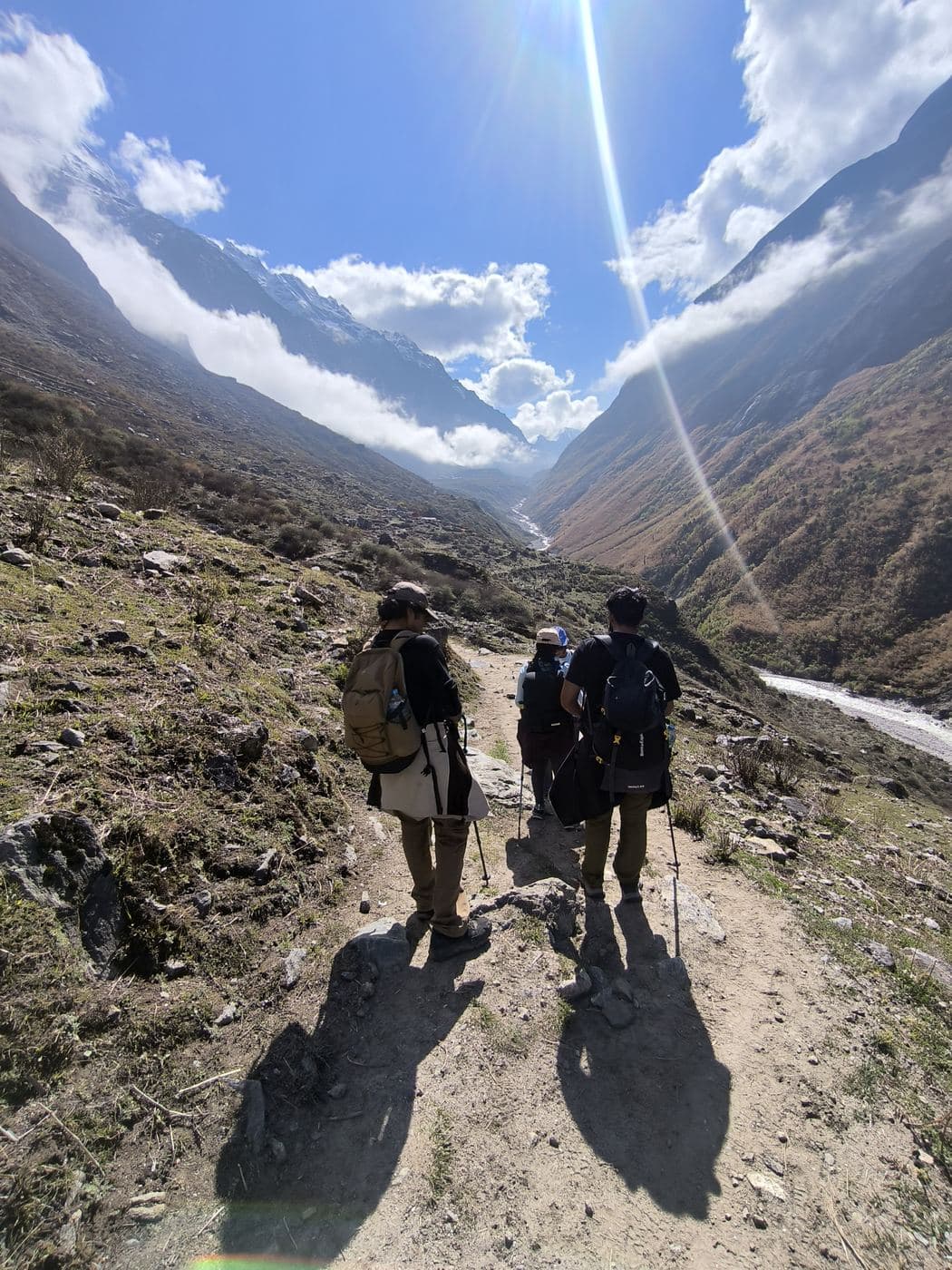
Annapurna Circuit Trek
- 16 days
- Challenging
- Max 5,416 m
- Private group
The classic loop over Thorong La (5,416 m), from green Marsyangdi valleys to the dry hills of Mustang.
From $1,150 per person
Government-licensed trekking agency · Reg. tourest registation · TAAN member
Popular treks
Annapurna Base Camp Trek11 days · from $850Annapurna Circuit Trek16 days · from $1,150Everest Base Camp Trek14 days · from $1,000Langtang Valley Trek10 days · from $890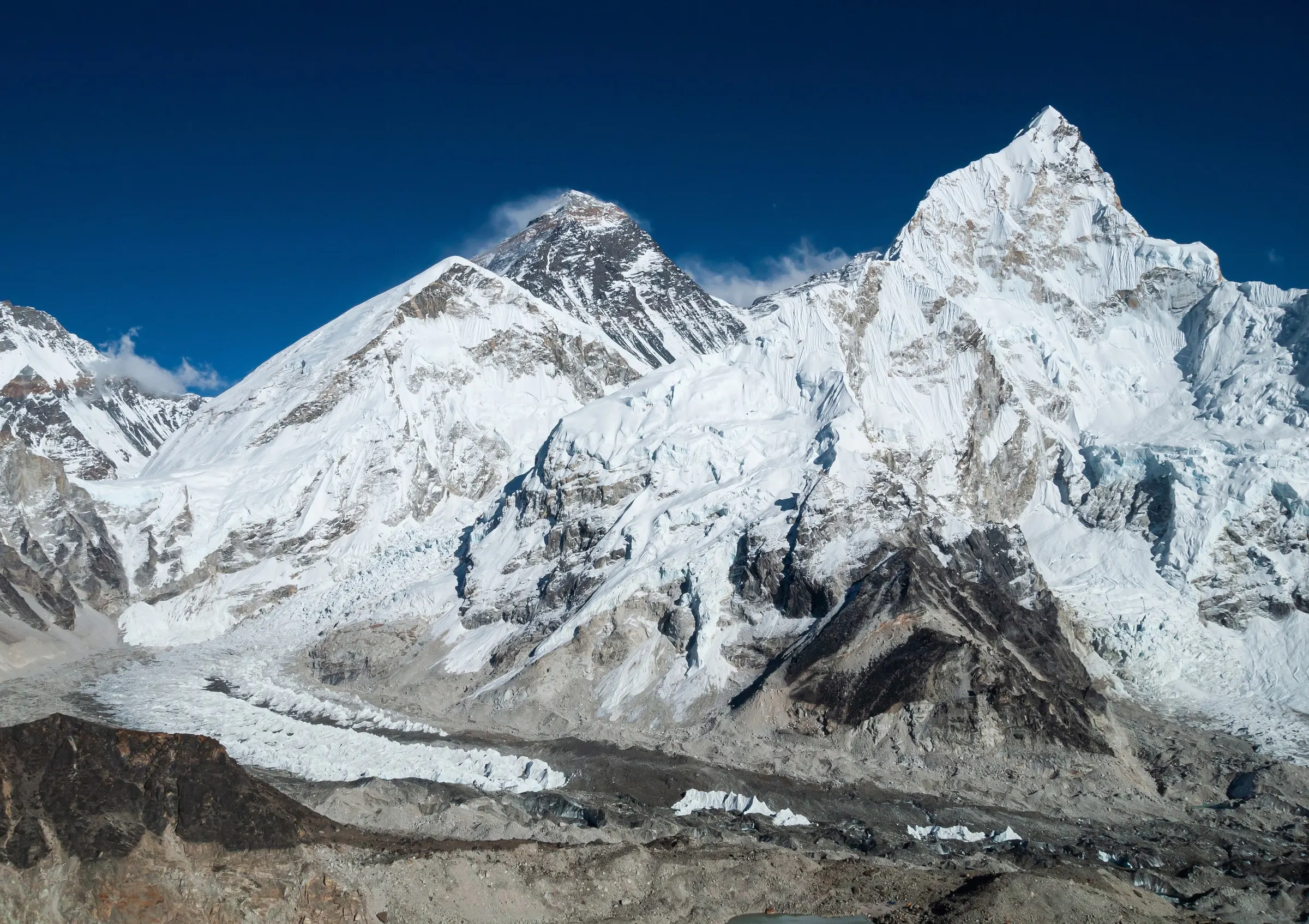 EverestUp to 5,545 m
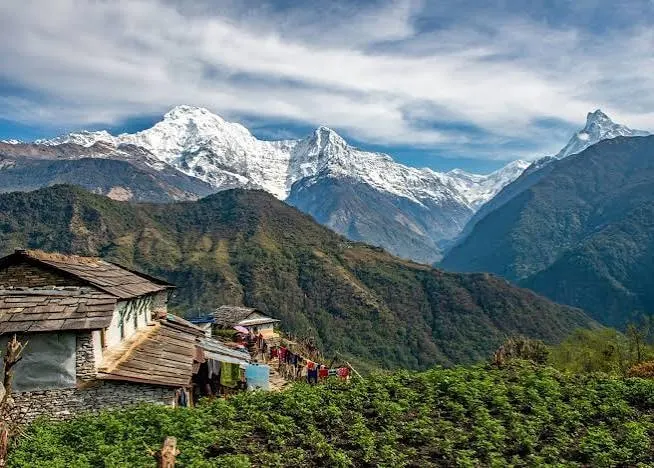 AnnapurnaUp to 5,416 m
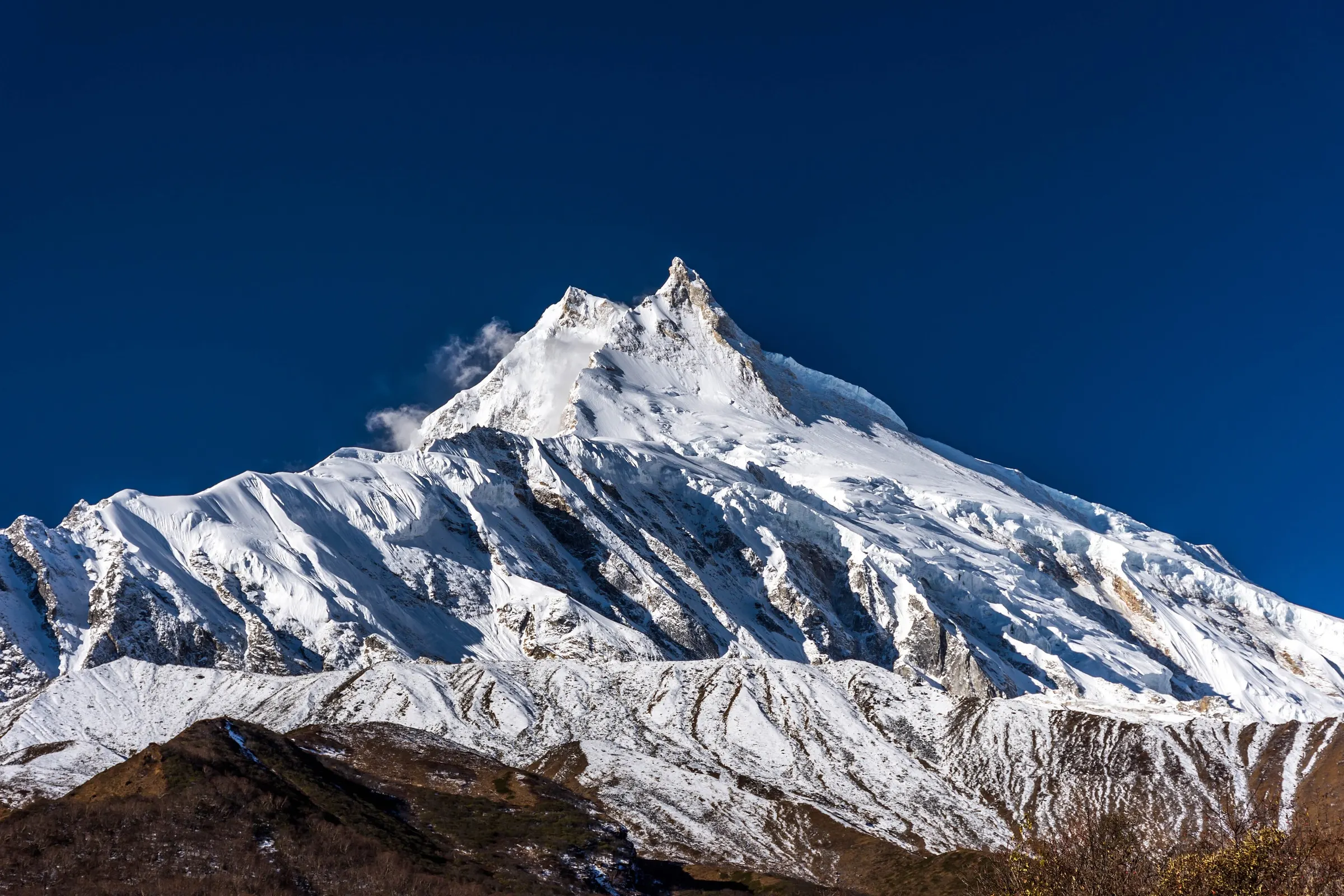 ManasluUp to 5,106 m
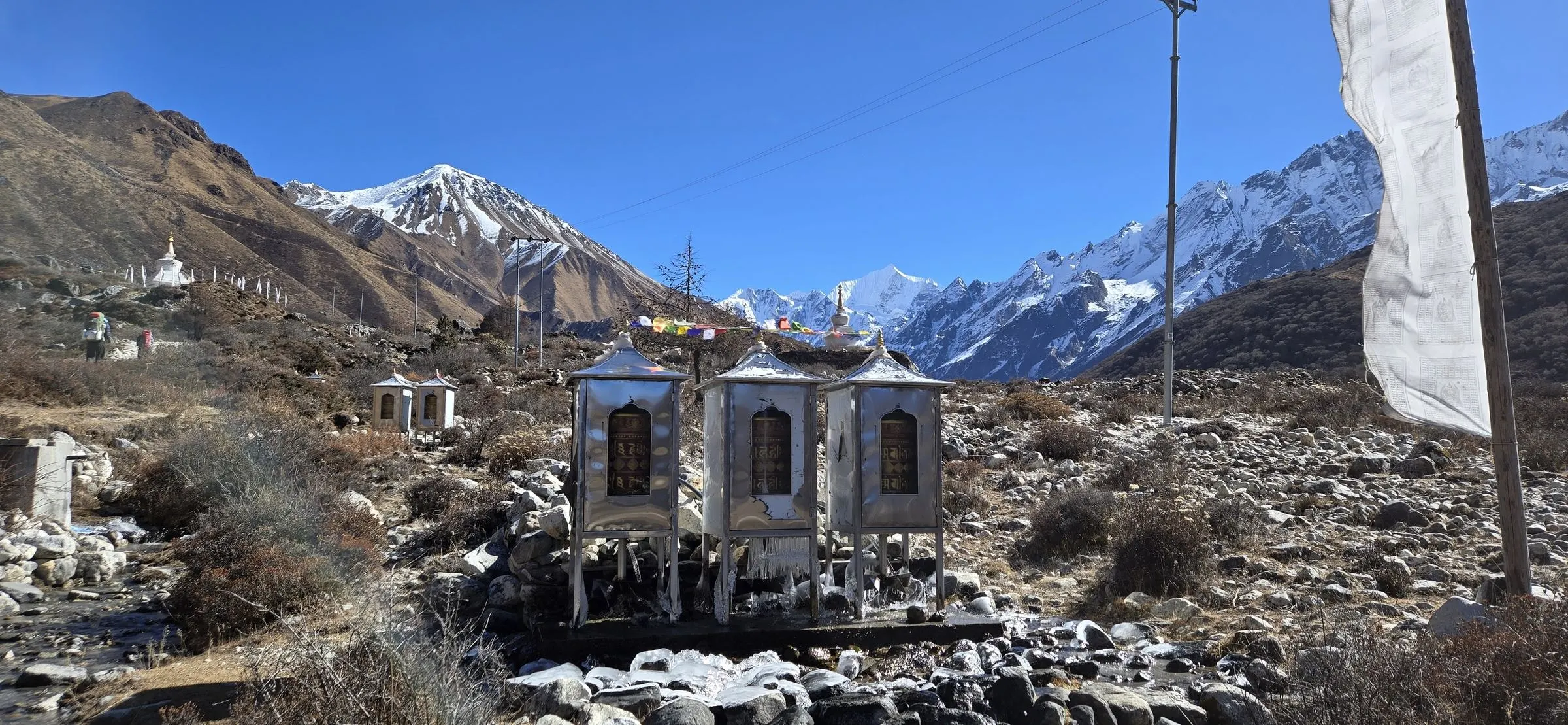 LangtangUp to 4,984 m
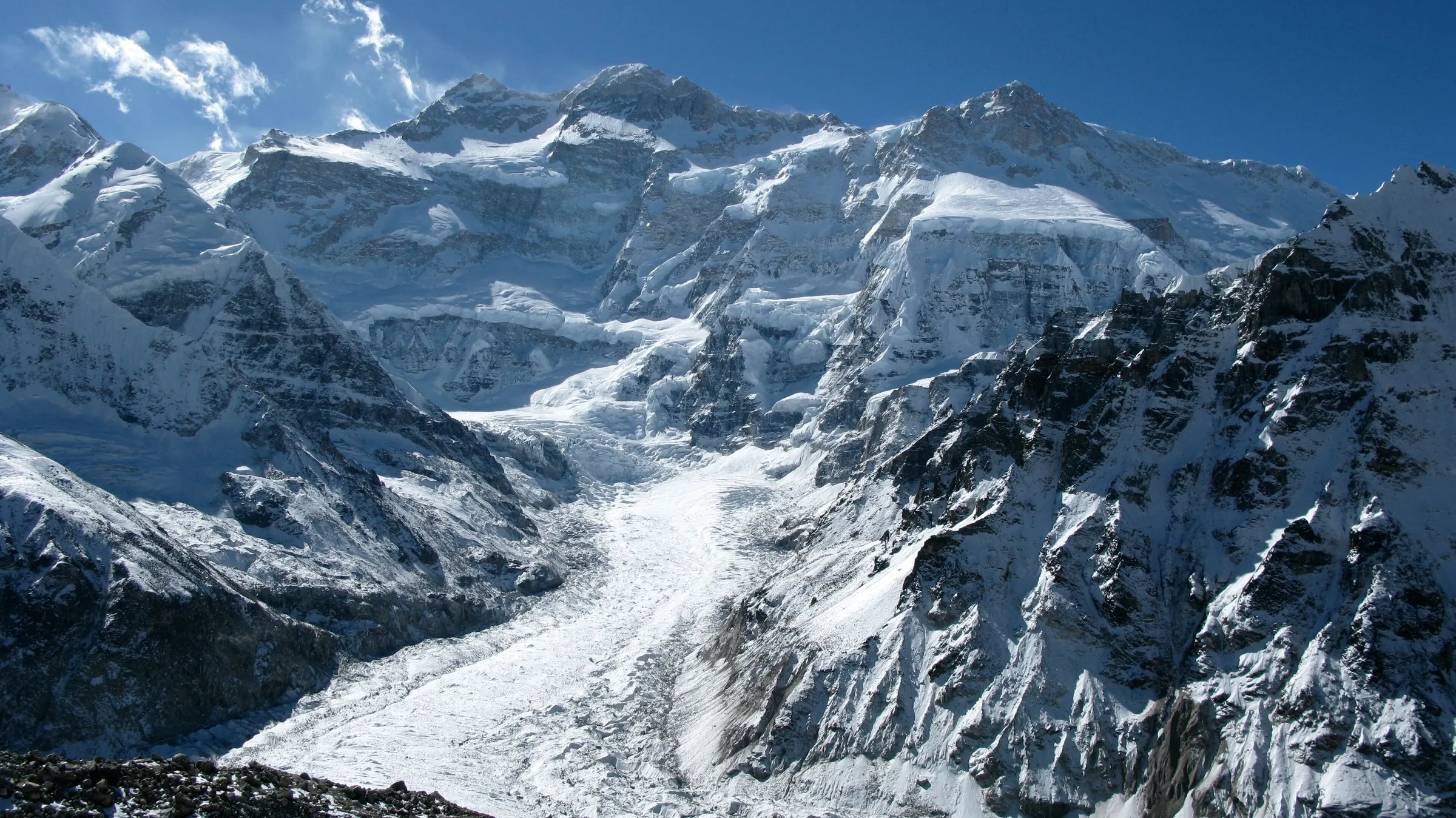 KanchenjungaUp to 5,143 m
 Mustang RegionUp to 8,167 m
Annapurna Conservation Area, Mustang, Nepal
Best: Mar–May, Sep–Nov
Explore the Last Forbidden Kingdom of the Himalayas: ancient sky caves, walled Lo Manthang & timeless Tibetan culture.
About the region
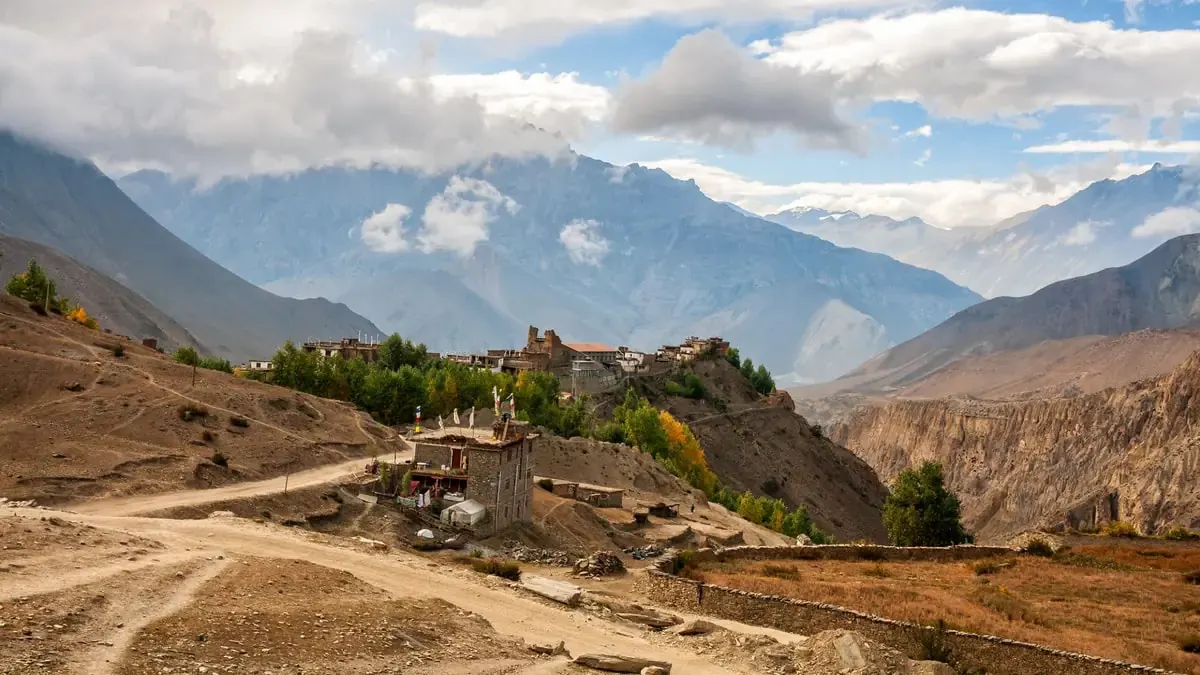
Mustang is one of the most dramatic and culturally rich regions of Nepal, hidden in the rain shadow of Annapurna and Dhaulagiri. It stretches from the deep Kali Gandaki gorge up to the Tibetan Plateau. The district holds windswept deserts, red cliffs, apple orchards, sacred temples and the walled city of an ancient kingdom. Whether you come for a short trek, a holy pilgrimage or a long journey into the restricted north, Mustang shows a side of the Himalayas found nowhere else.
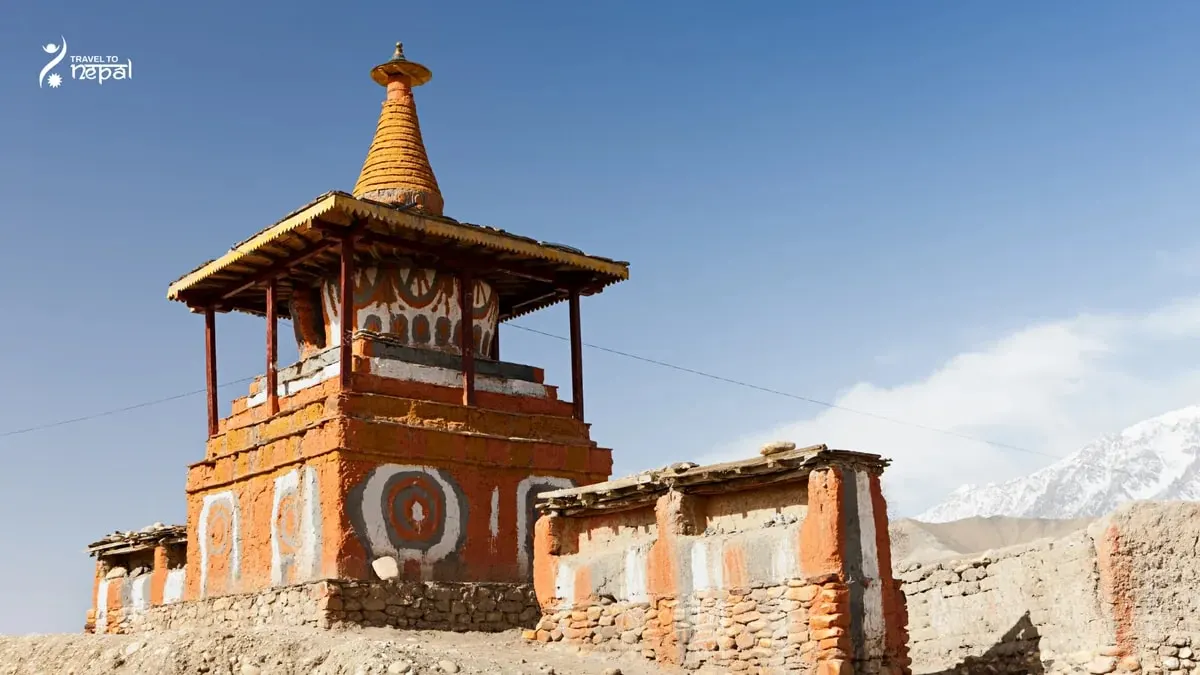
Image: Painted Chorten in Upper Mustang
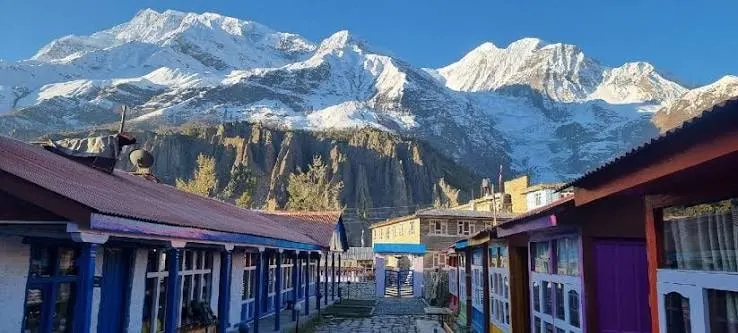
The region divides naturally into Lower Mustang and Upper Mustang. Lower Mustang is the easier and more accessible part, home to the Thakali people. Their stone villages, such as Marpha, Tukuche and Jomsom, are famous for warm hospitality, hearty dal bhat and local apple brandy. Marpha’s whitewashed lanes and orchards make it one of the prettiest villages in Nepal. The gateway village of Kagbeni sits where the green valleys meet the high desert. Its mud-brick houses and old monastery mark the edge of the former forbidden kingdom.
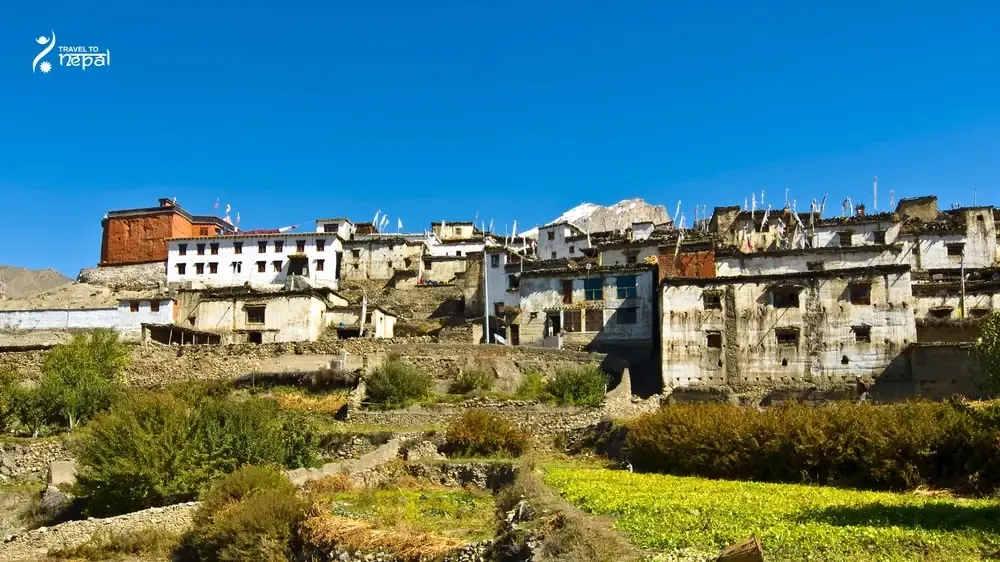
Image: Kagbeni
Above the valley lies Muktinath, one of the most sacred pilgrimage sites in Nepal, at about 3,700 metres. Hindus and Buddhists both worship here. Pilgrims bathe beneath 108 stone water spouts and visit an eternal flame that burns from natural gas. In the riverbed of the Kali Gandaki, travelers search for shaligrams, black fossil stones holding ammonites that are millions of years old. These stones are revered as symbols of Lord Vishnu.
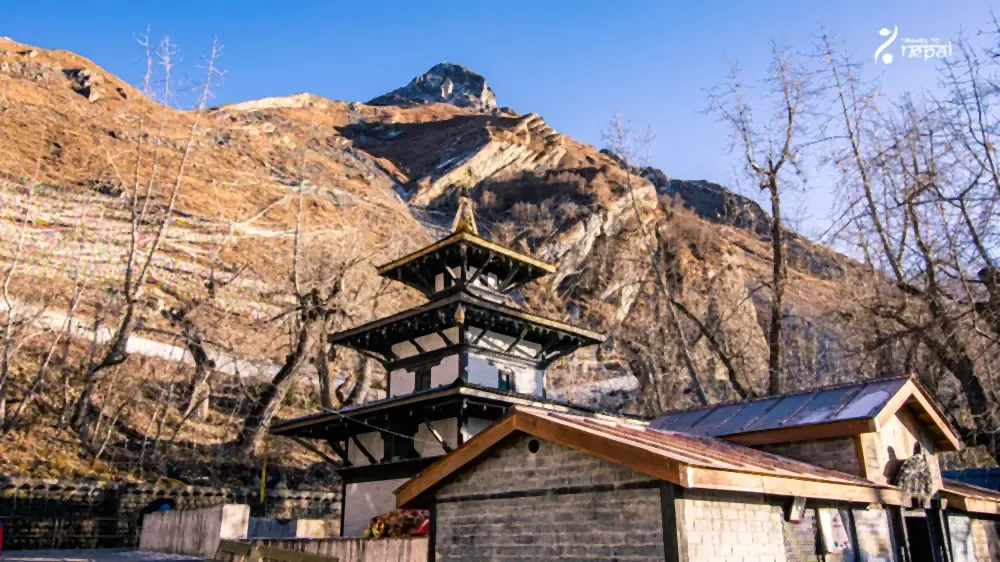
Image: Muktinath
North of Kagbeni begins Upper Mustang, the old Kingdom of Lo. It stayed closed to foreigners until 1992, which earned it the name “last forbidden kingdom”. Its walled capital, Lo Manthang, was founded in the 14th century. It still stands within earthen walls, around a former royal palace and monasteries with some of the finest Tibetan Buddhist murals in the world. Kings ruled Lo until 2008, and the Loba people still keep alive their Tibetan language, faith and traditions. Each spring, the masked dances of the Tiji Festival fill Lo Manthang with colour and ritual.
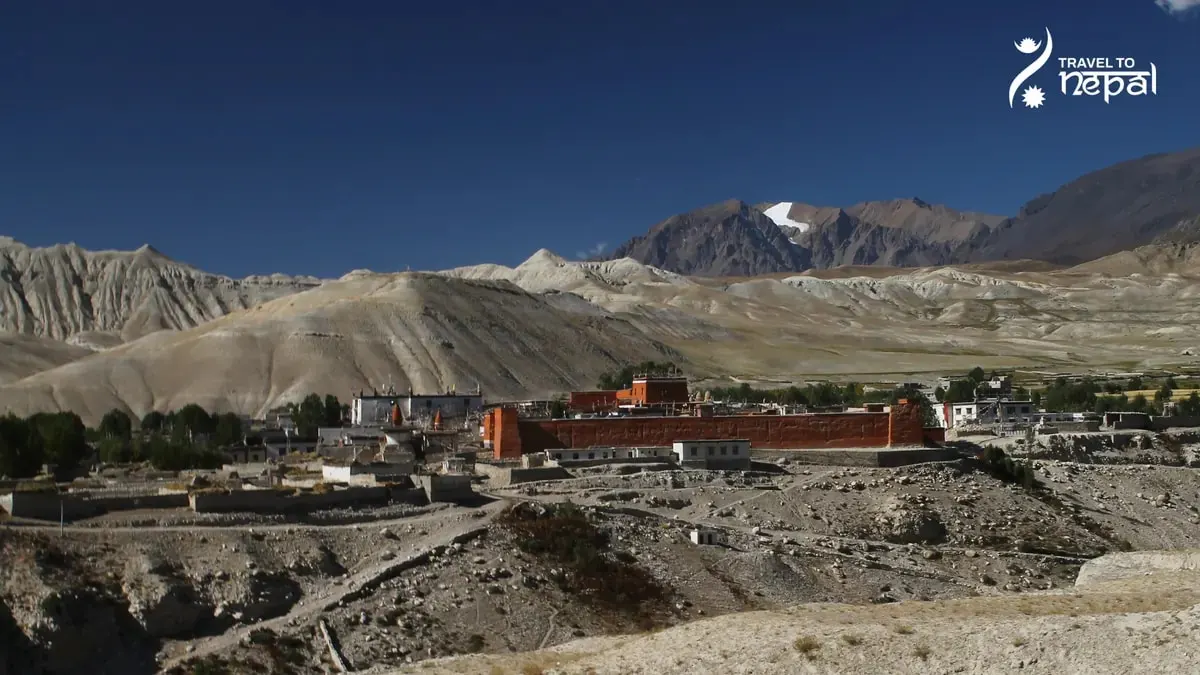
Image: Lo Manthang
Mustang’s human story goes back thousands of years. Thousands of man-made sky caves are carved high into the cliffs. They were used as homes, shrines and burial chambers. Archaeologists have found human remains there more than 2,500 years old, along with ancient manuscripts and painted Buddhist art. Few places in the Himalayas preserve such a long record of human civilization.
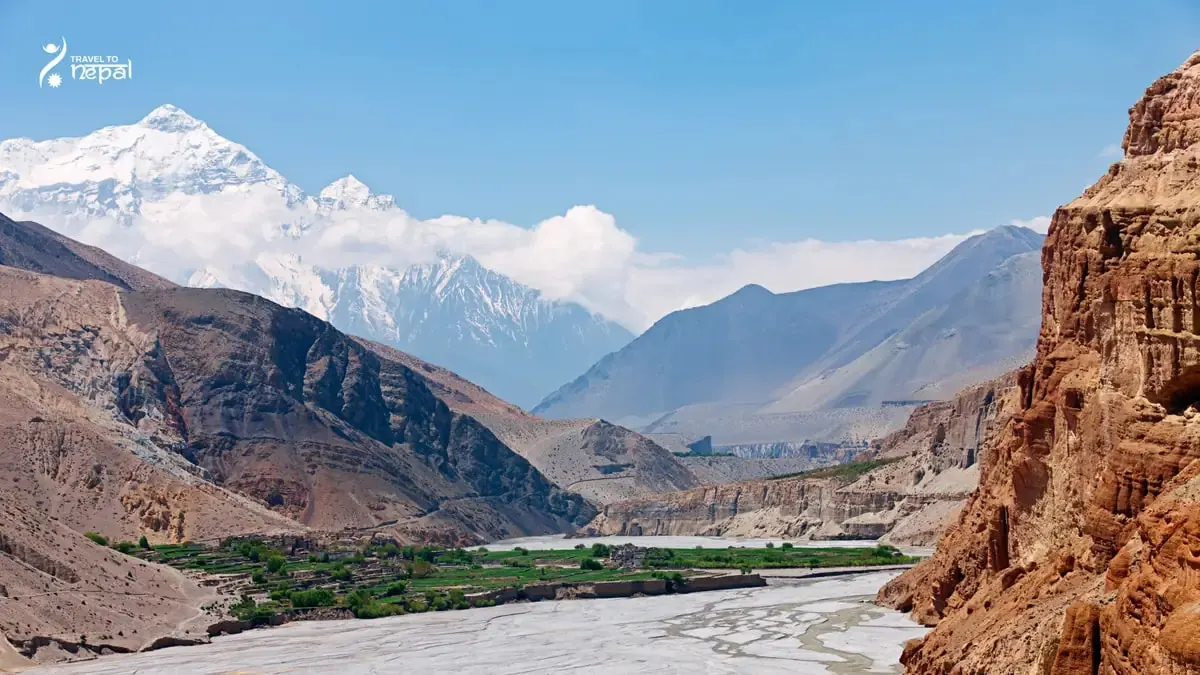
The Kali Gandaki cuts between Dhaulagiri and Annapurna to form one of the deepest gorges on earth. Strong afternoon winds sweep up the valley, shaping eroded cliffs in shades of red, gold and grey. Snow peaks such as Nilgiri and Tilicho tower over green oases of barley and buckwheat. Because Mustang sits behind the main Himalayan range, it gets very little rain. That makes it one of the best regions for trekking in Nepal during the summer monsoon, as well as in spring and autumn.
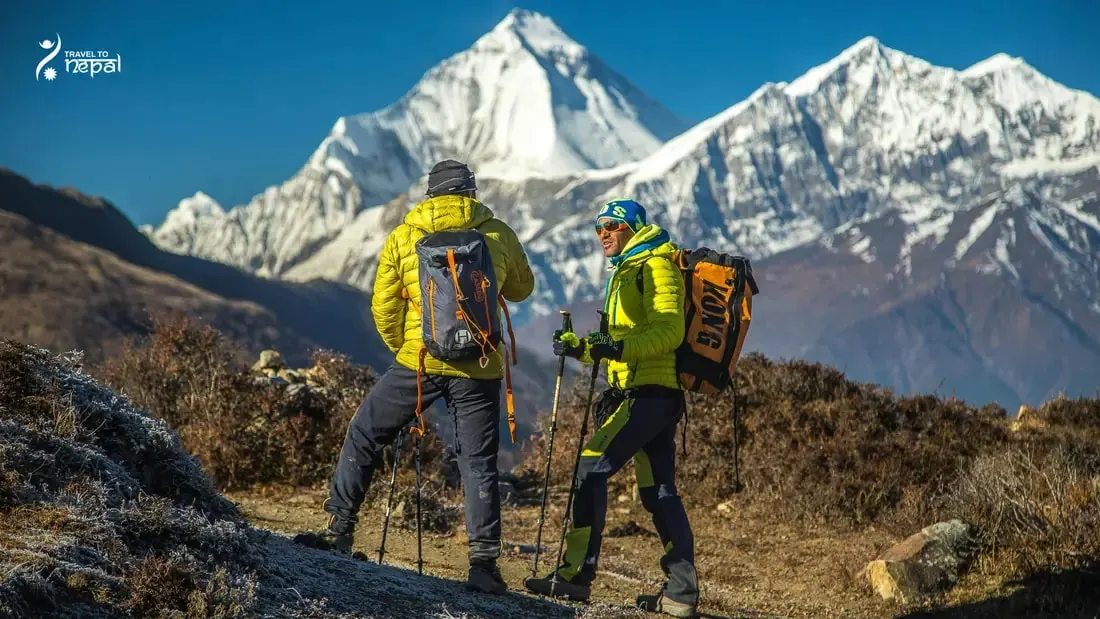
Image: Mustang Trek with Mt. Dhaulagiri view (8,167 meter)
Getting to Mustang is easier than ever. Short flights connect Pokhara to Jomsom, and a road through the valley makes jeep travel possible. Popular routes include the Jomsom–Muktinath trek, the Lower Mustang section of the Annapurna Circuit, Mesokanto La trek, and the classic Upper Mustang trek to Lo Manthang. Remote adventures lead to the sacred lake of Damodar Kunda. Lower Mustang needs only standard Annapurna Conservation Area permits. Upper Mustang requires a special restricted area permit and a licensed guide.
From Thakali villages and holy shrines to cave cities and a hidden kingdom, Mustang is a journey through the Himalayas and through thousands of years of history.
Red canyons and snow peaks in Nepal’s rain shadow.
Walled Lo Manthang, sky caves and the Tiji Festival.
Stone villages, hearty dal bhat and Marpha apple brandy.
Walk to Muktinath and along the Kali Gandaki gorge.
Treks
Bucket-list classic
Our signature Mustang Region trek
The classic loop over Thorong La (5,416 m), from green Marsyangdi valleys to the dry hills of Mustang.
From $1,150 per person
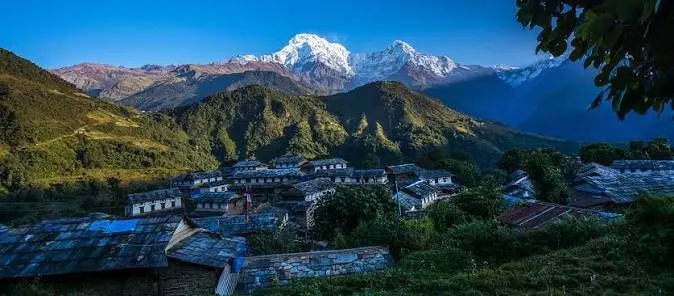 Nearby trekLangtang Valley Trek10 days · Moderate · max 4,773 mGlaciers, yak pastures and Tamang villages, close to Kathmandu with no flights.
Combine treks, a shorter version or a side trip. We plan it around your days.
Best time to go
Best
Days are mild and sunny, with clear views of Nilgiri, Dhaulagiri and Annapurna. Apple trees bloom in Marpha and the valleys turn green. In May, the Tiji Festival in Lo Manthang adds a rare cultural highlight. Afternoons can be windy, and nights are still cold in Upper Mustang.
Possible
Mustang lies in the rain shadow, so it stays mostly dry while the rest of Nepal gets heavy rain. That makes it one of the few good monsoon treks in Nepal. The journey in can be tricky, though: Jomsom flights are often delayed by clouds, and landslides can block the road from Pokhara. Plan a few spare days.
Best
This is the most popular time to trek. The skies are clear and stable, the mountain views are sharp, and the temperatures are comfortable for walking. Harvest season brings golden fields and lively villages. October and early November are the busiest months, so it’s worth booking flights and lodges early.
Not ideal
It gets very cold, especially in Upper Mustang, where nights drop well below freezing and snow can block high passes. Many locals move to lower areas for winter, so some teahouses close. Lower Mustang, including Jomsom, Marpha and Muktinath, is still possible for well-prepared travelers.
Your guides
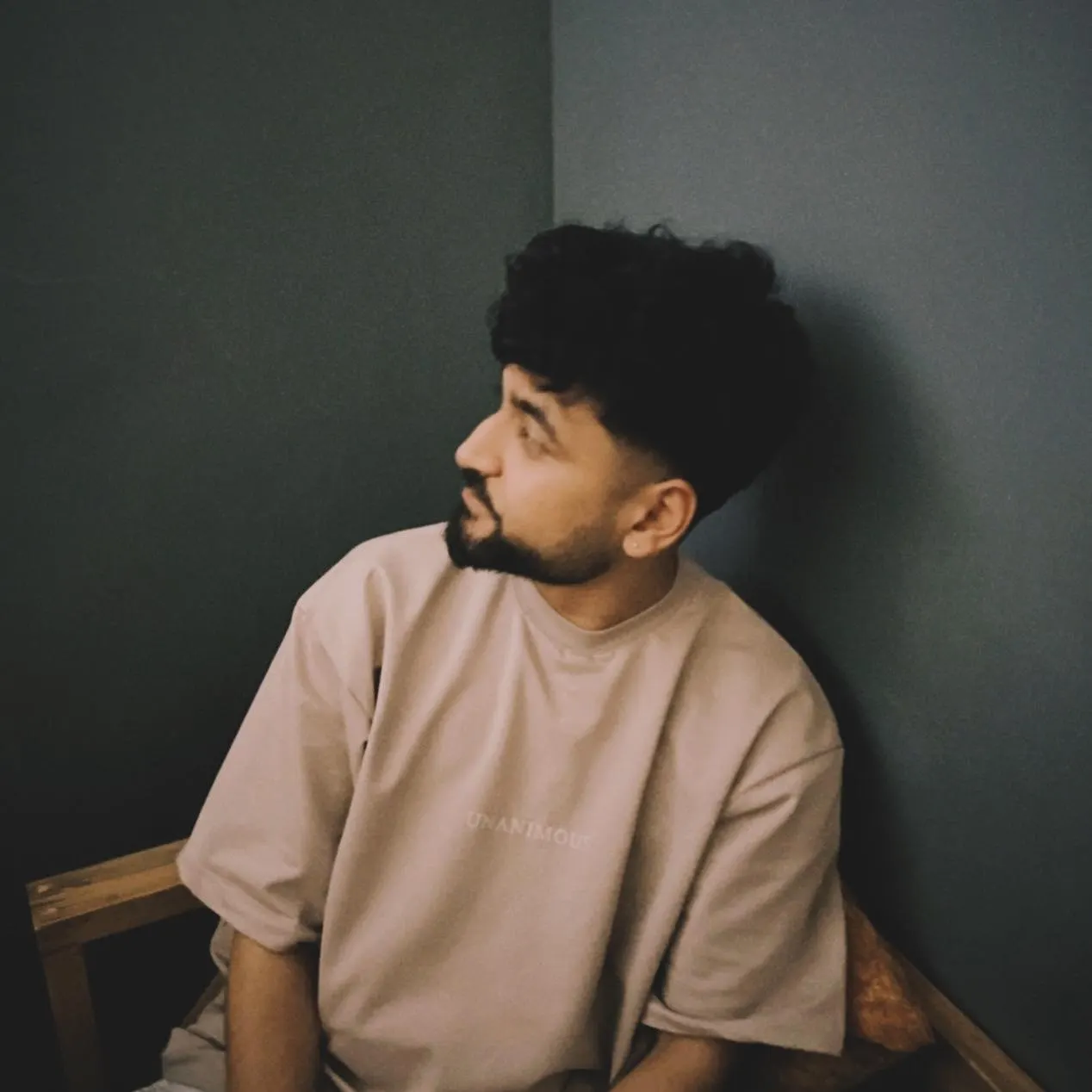
Senior trek leader, Everest region · 20+ yrs guiding
“We climb slowly and check everyone every evening. The mountain is not going anywhere.”
English, Nepali, Sherpa
Photos
Travel guides
 Best time to trek
Mustang weather, Tiji Festival dates and the best months for trekking, horse riding and biking.
Questions
Mustang is in western Nepal, north of Pokhara, on the border with Tibet. It lies behind the Annapurna and Dhaulagiri ranges and stretches from the Kali Gandaki valley to the Tibetan Plateau.
Upper Mustang was the independent Kingdom of Lo, and it was closed to foreign visitors until 1992. Its walled capital, Lo Manthang, and its Tibetan Buddhist culture stayed largely untouched for centuries, which earned it the name “last forbidden kingdom”.
Lower Mustang includes Jomsom, Marpha, Kagbeni and Muktinath, and it is open to all trekkers with standard permits. It has green valleys, apple orchards, Thakali villages and the holy Muktinath Temple. Upper Mustang starts north of Kagbeni and is a restricted area. It is a dry, high-altitude desert of red cliffs, sky caves, Tibetan Buddhist culture and the walled city of Lo Manthang, capital of the old Kingdom of Lo.
Yes. Lower Mustang needs the Annapurna Conservation Area Permit (ACAP). For Upper Mustang, foreigners also need a Restricted Area Permit (RAP), which is issued by Nepal’s Department of Immigration and is mandatory for foreign visitors entering the restricted zone.
The fee changed in 2026. Foreigners visiting Upper Mustang are now required to pay a daily fee of $50, which replaced the old flat $500 fee and makes short trips much more affordable. The ACAP permit is extra.
You can’t trek independently, but solo travel is now possible. Under the new rules, the two-people rule has been scrapped, and since March 22, 2026 you can trek solo in Upper Mustang with a licensed guide.
Travel from Kathmandu to Pokhara by flight or bus, then take a short flight or a jeep to Jomsom. From Jomsom, you can trek or drive to Kagbeni, Muktinath and Lo Manthang (both local jeeps and private jeeps are available).
Spring (March–May) and autumn (September–November) are best, with clear skies and mild days. Mustang lies in a rain shadow, so it is also one of the few places in Nepal you can trek during the monsoon (June–August).
Our Upper Mustang treks take 12 days from Pokhara. Shorter jeep tours to Lo Manthang are also possible in about 7 to 9 days.
The Mustang trek is moderate. It has no high passes on the main route, but it involves long, windy days and altitudes up to about 3,800 m at Lo Manthang. A basic level of fitness and a slow climb help prevent altitude sickness.
Other regions
Tell us your dates and fitness. A local planner replies on WhatsApp or by email within a few hours.