In this guide (9 sections)
Quick answer
October and November are the best months: clear skies, firm trails and the most reliable conditions on the Larkya La (5,106 m). March and April are the next best, with warm valley days and rhododendrons. Avoid the monsoon (June to August) and deep winter, when snow often closes the pass.
I grew up in Samagaon, below Manaslu, and I have crossed the Larkya La more times than I can count. The valley has every climate in one trek: banana trees and waterfalls at Machha Khola, pine forest at Namrung, and ice at the top of the pass. So the best month isn't only about the views. It is about whether the pass is safe to cross on your day.
Manaslu Circuit month by month
| Month | On the trail | Crowds | Our verdict |
|---|---|---|---|
| January | Deep snow on the Larkya La; most lodges above Samdo are closed. | Very low | Not ideal |
| February | Still winter at the pass. Lower valley walks only. | Very low | Not ideal |
| March | Snow easing on the pass, cold clear mornings, rhododendrons lower down. | Low | Best |
| April | Warm valley days, settled weather and good conditions on the Larkya La. | Medium | Best |
| May | Hazier views and afternoon cloud as the monsoon approaches. | Low | Possible |
| June | Monsoon begins: rain, leeches and landslides in the gorge. | Very low | Not ideal |
| July | Heaviest rain; the road to Machha Khola can close. | Very low | Not ideal |
| August | Wet, cloudy and slippery on the lower trail. | Very low | Not ideal |
| September | Rain fading late in the month; green valleys, some cloud. | Low | Possible |
| October | Clear skies, firm trails and the best views of Manaslu. | Busiest | Best |
| November | Crisp and stable; cold nights at Dharmasala. | Busy | Best |
| December | Clear but cold; heavy snow can close the pass any day. | Low | Possible |
Autumn (late September to November): the best season
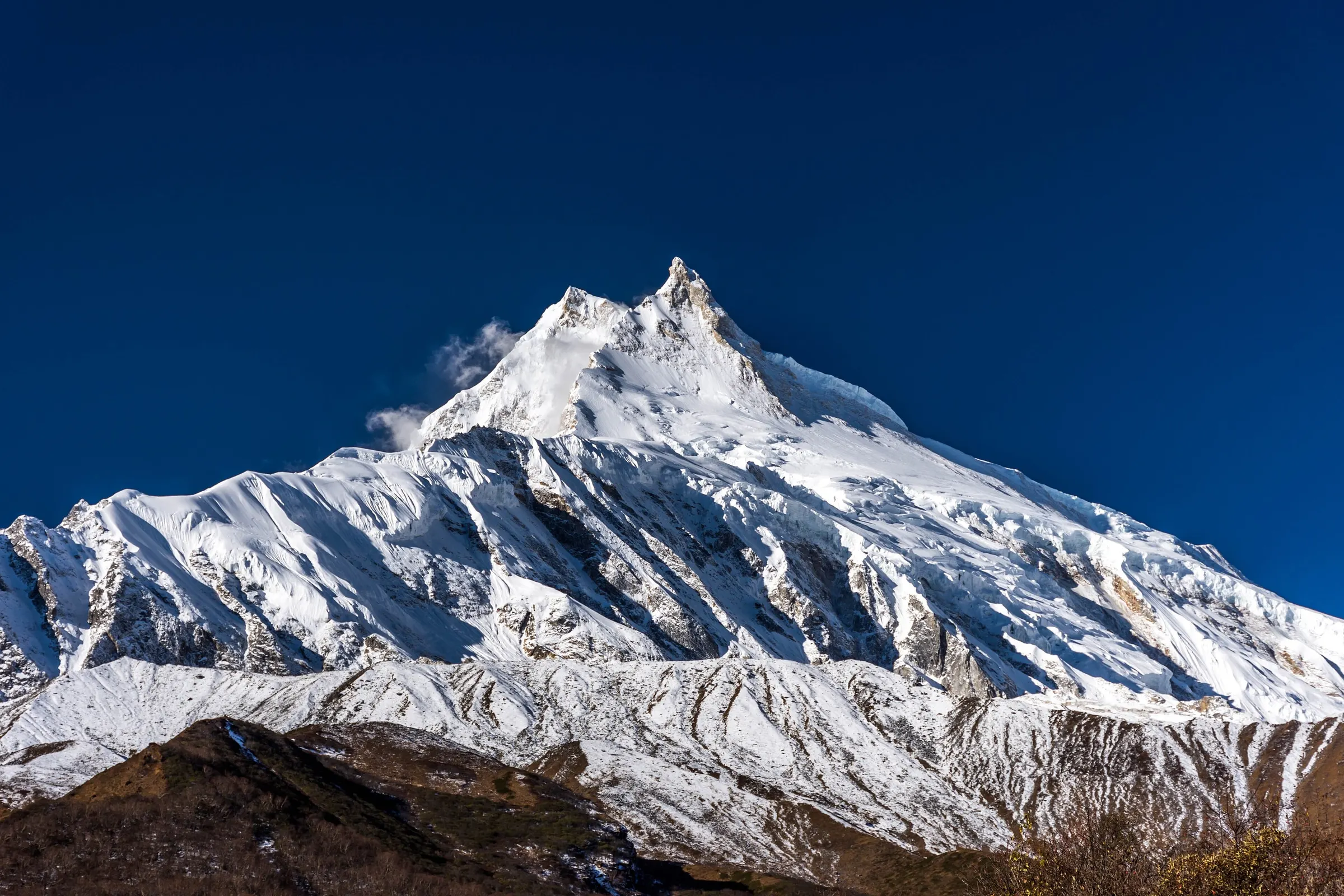
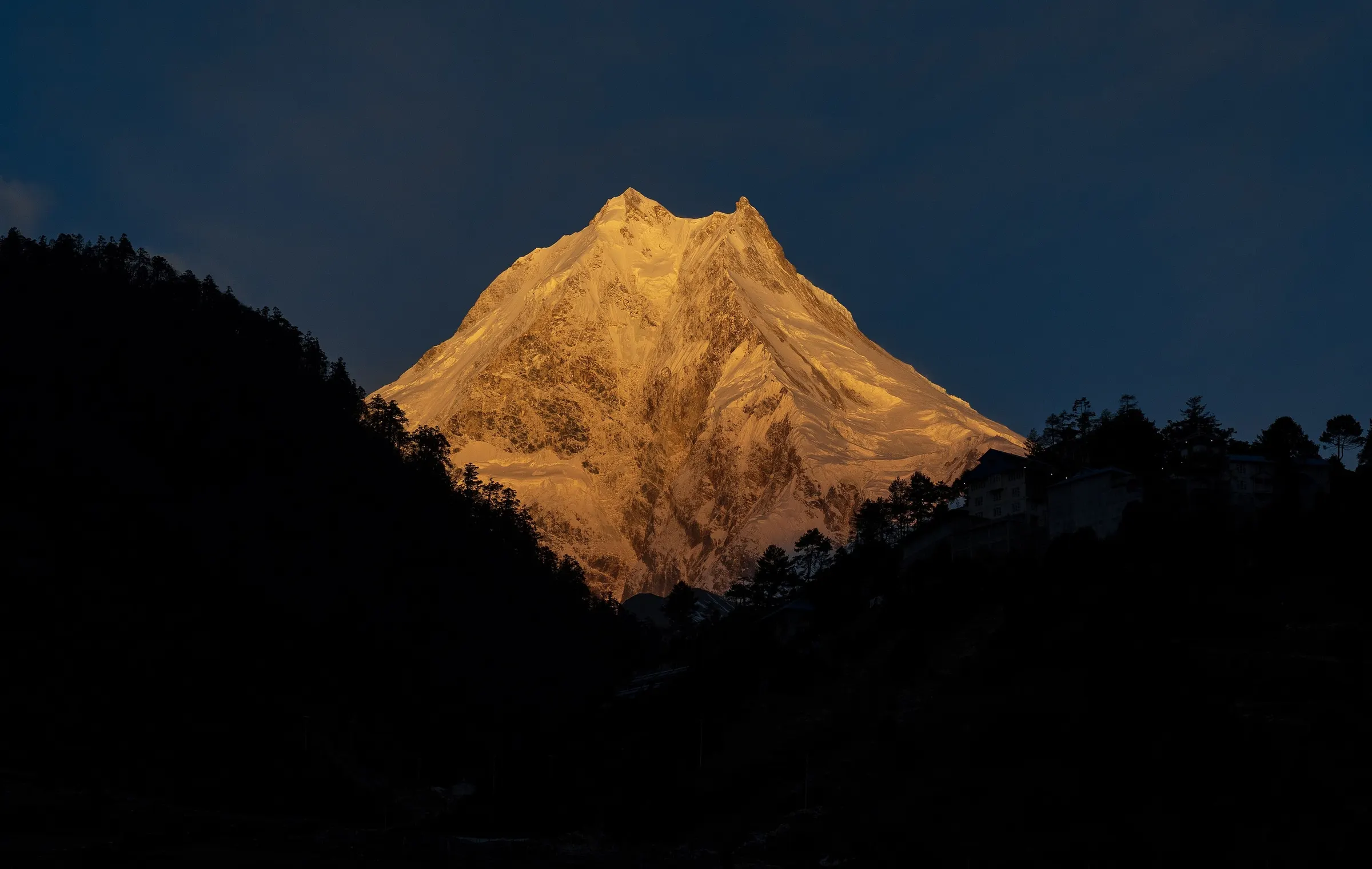
After the monsoon, the air is washed clean and Manaslu stands sharp above Samagaon. Days are dry and stable, and the snow on the Larkya La is usually firm. October is the most popular month, but the restricted-area rules keep numbers far lower than on the Annapurna Circuit.
By late November the nights at Dharmasala (4,460 m) are very cold, often well below freezing, but the skies are at their clearest. If you don't mind the cold, it is my favourite time of year.
Spring (March to May): flowers and warm days
In March the snow on the pass starts to ease, and by April the lower valley is warm and green, with rhododendrons in flower between Deng and Namrung. Mornings are usually clear; cloud often builds in the afternoon, so we start early.
May is still possible, but it gets hazier and warmer as the monsoon approaches, and the views are less reliable.
How the weather changes as you climb
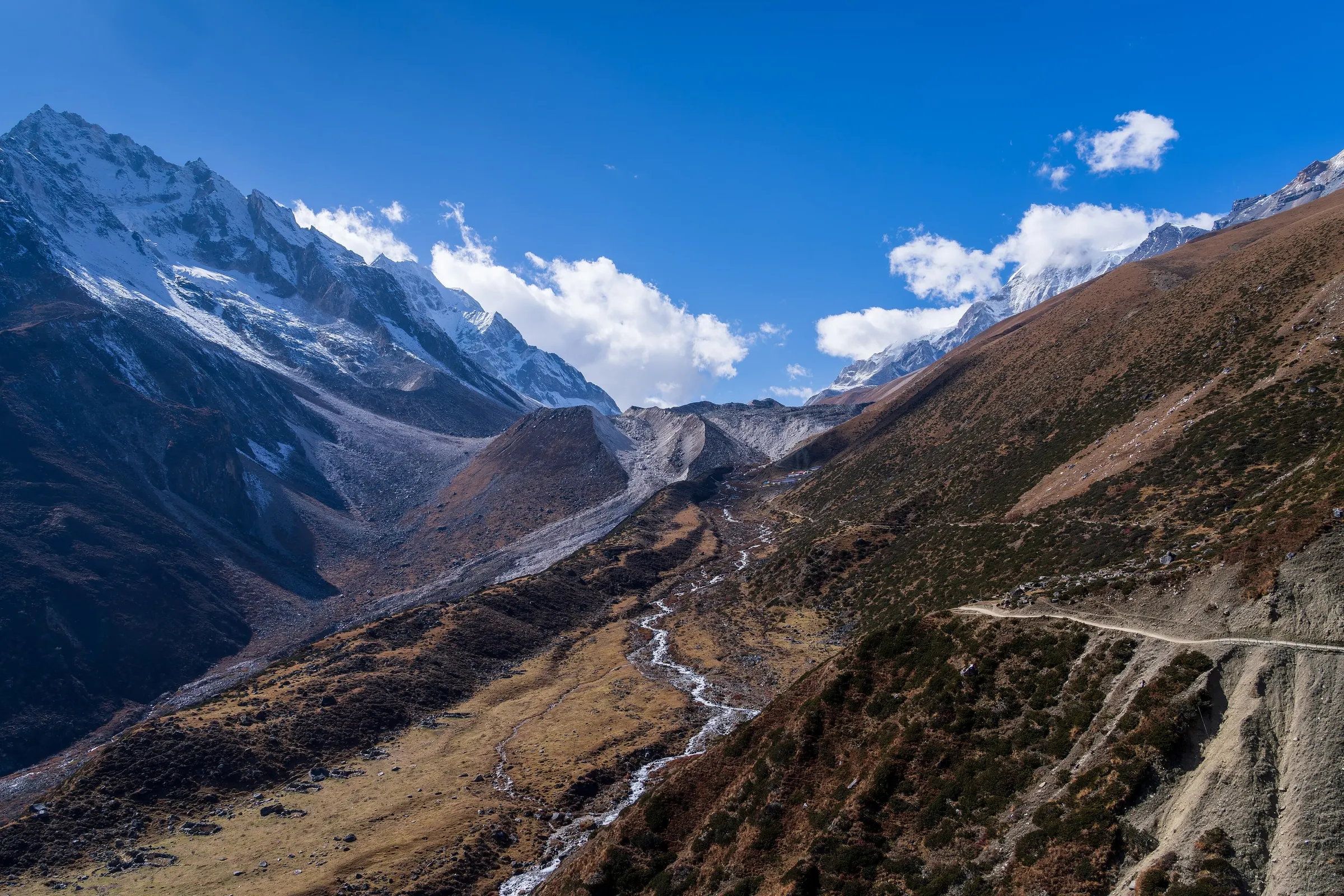
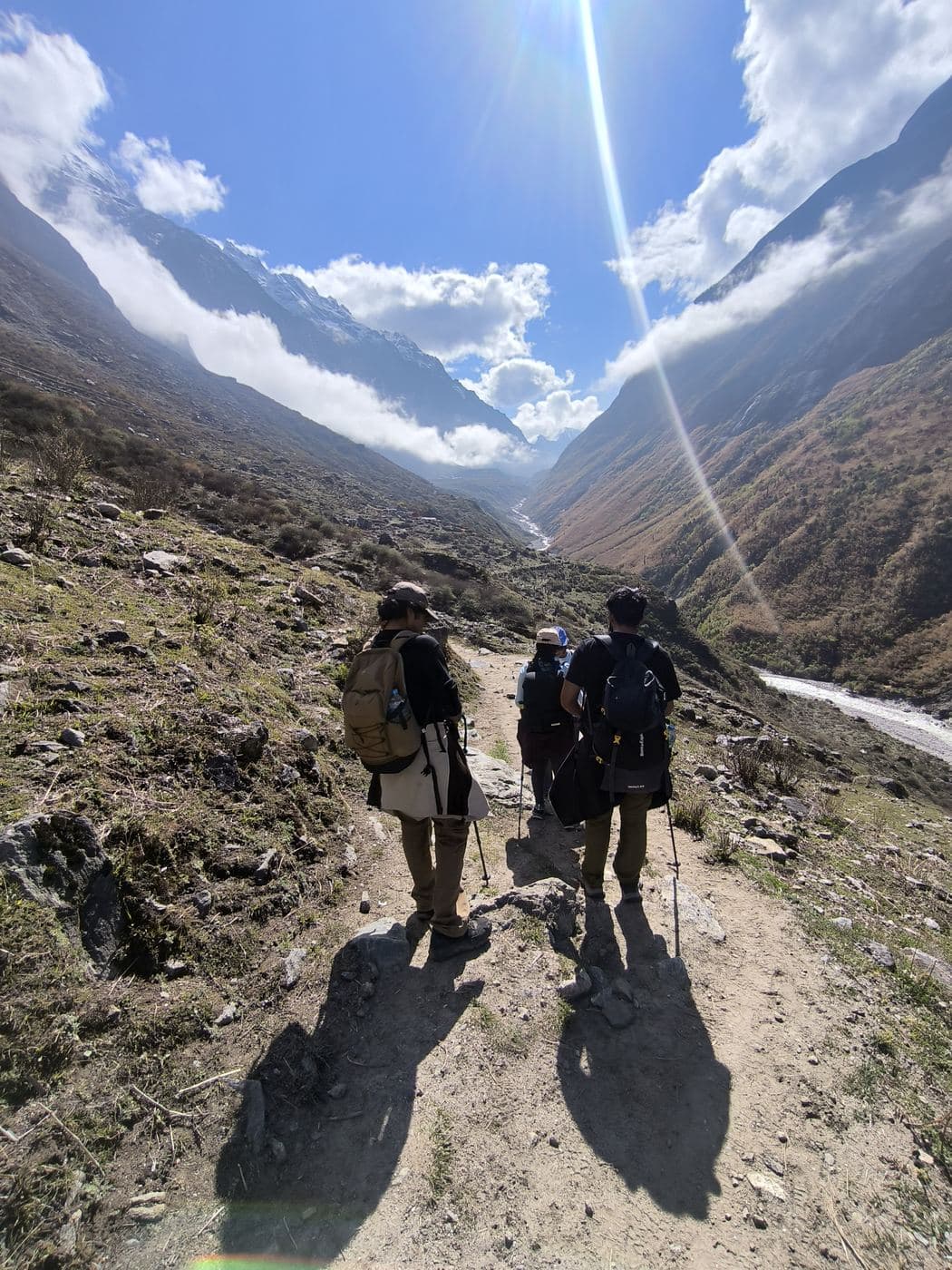
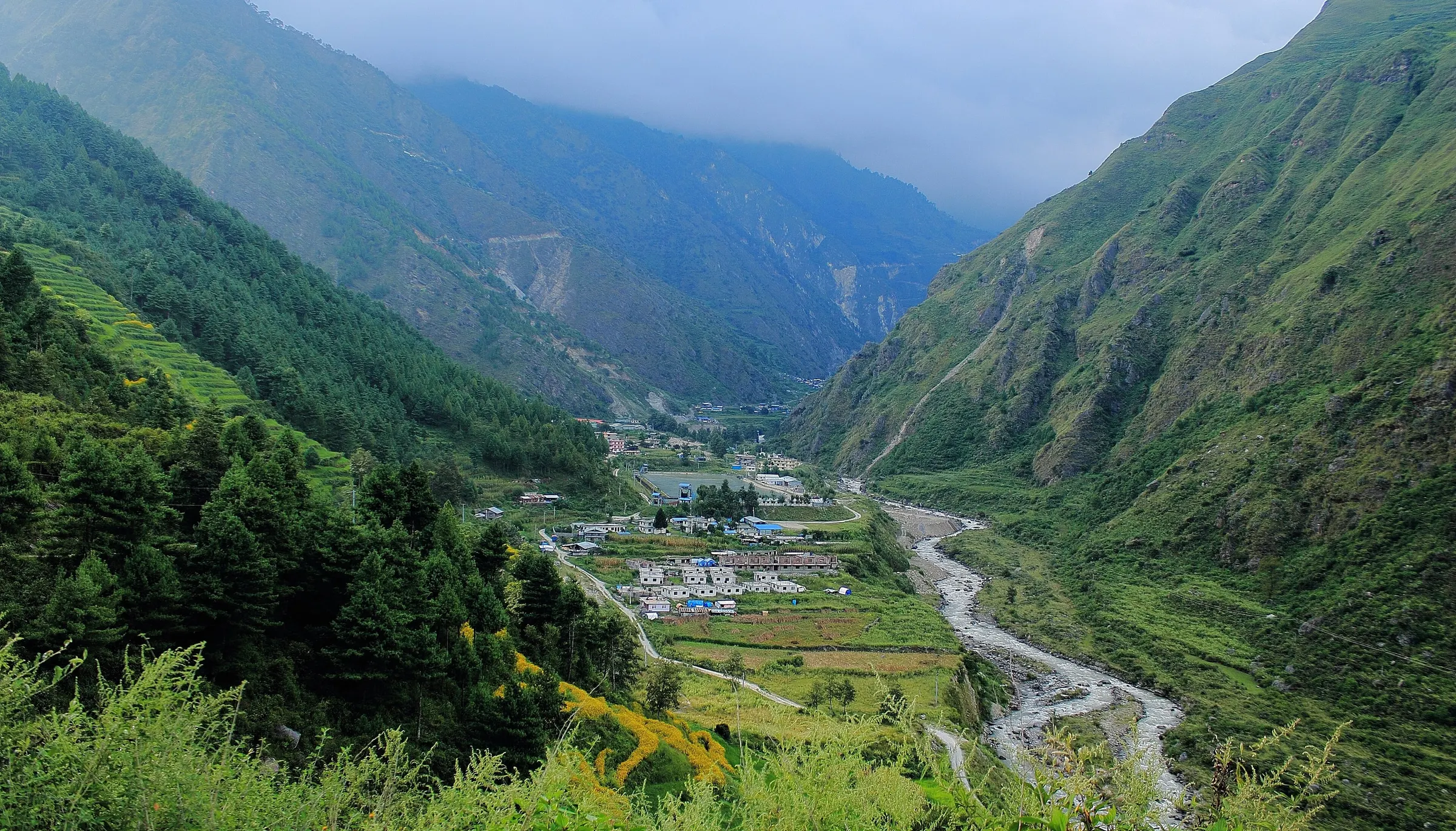
In any season, the trek starts warm. At Machha Khola and Jagat, in the deep gorge of the Budhi Gandaki, autumn days are often hot and humid, and you walk in a T-shirt. By Namrung the air is cooler and the forest turns to pine and rhododendron.
From Lho and Samagaon upwards, mornings are cold and clear, and the wind picks up in the afternoon. At Samdo and Dharmasala, nights are below freezing even in October. On the pass itself you start before dawn in the dark and the cold, and by the time you reach Bhimthang the sun is warm again. Plan your layers for the whole range, not for the month.
Monsoon (June to August): why we don't go
Heavy rain falls in the Budhi Gandaki gorge, and landslides can close the road and parts of the trail. Leeches are common in the forest, and the mountains are mostly hidden. Unlike Nar Phu, which sits in the rain shadow, Manaslu takes the full monsoon on its lower half.
Winter (December to February): only for the lower valley
Early December can still be clear and beautiful, but heavy snow can close the Larkya La at any time, and many lodges above Samdo shut for the winter. From late December to February we suggest a shorter trek in the lower valley, or the Tsum Valley in good years, rather than the full circuit.
What to pack for each season
Whatever the month, you walk from about 900 m at Machha Khola to 5,106 m on the pass, so you need layers for heat and for hard frost.
Autumn: a down jacket and warm gloves for the pass morning, sun protection for the bright days, and a sleeping bag for nights well below freezing at Dharmasala.
Spring: lighter layers for the warm lower valley, a rain jacket for afternoon showers, and the same warm kit for the pass.
Early winter: extra warm layers, gaiters and microspikes in case of snow on the Larkya La. Your guide tells you in Samagaon if they are needed.
A porter carries your main bag, so you only walk with a daypack: water, snacks, a warm layer and a rain shell.
Festivals, crowds and combining treks
Autumn is festival season in Nepal. Dashain and Tihar usually fall in October or November, and in the villages you may see families gathering, swings built for children and special meals. Some lodges are busier with visiting relatives, so we book ahead.
In spring and autumn the Manaslu Circuit combines well with the Tsum Valley before the pass, or with Nar Phu after it, a few hours up the Marsyangdi from Dharapani. Both need their own restricted area permits, so tell us before we apply. See the Manaslu region page for more ideas.
“In Samagaon we say the mountain decides. In October it usually says yes. In January, it usually says come back in spring.”
Day 9: Samagaon to Samdo (3,875 m)
Yak pastures · Close to Tibet
3–4 hrs · 3,875 m
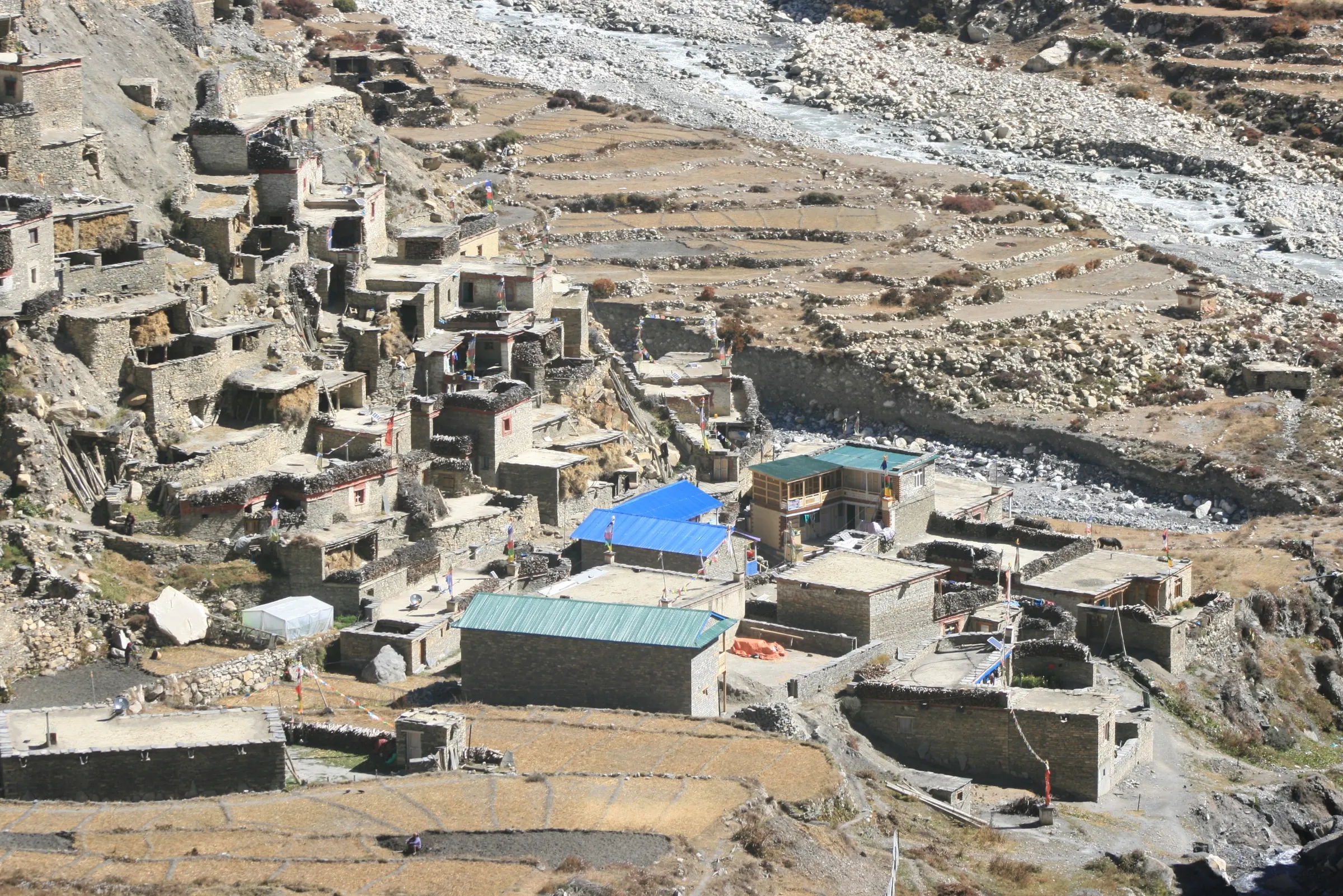
An easy, high walk along the river past yak pastures to Samdo, a village a few hours from the Tibetan border.
Day 10: Samdo to Dharmasala (Larkya Phedi, 4,460 m)
Short day · Rest before the pass
3–4 hrs · 4,460 m
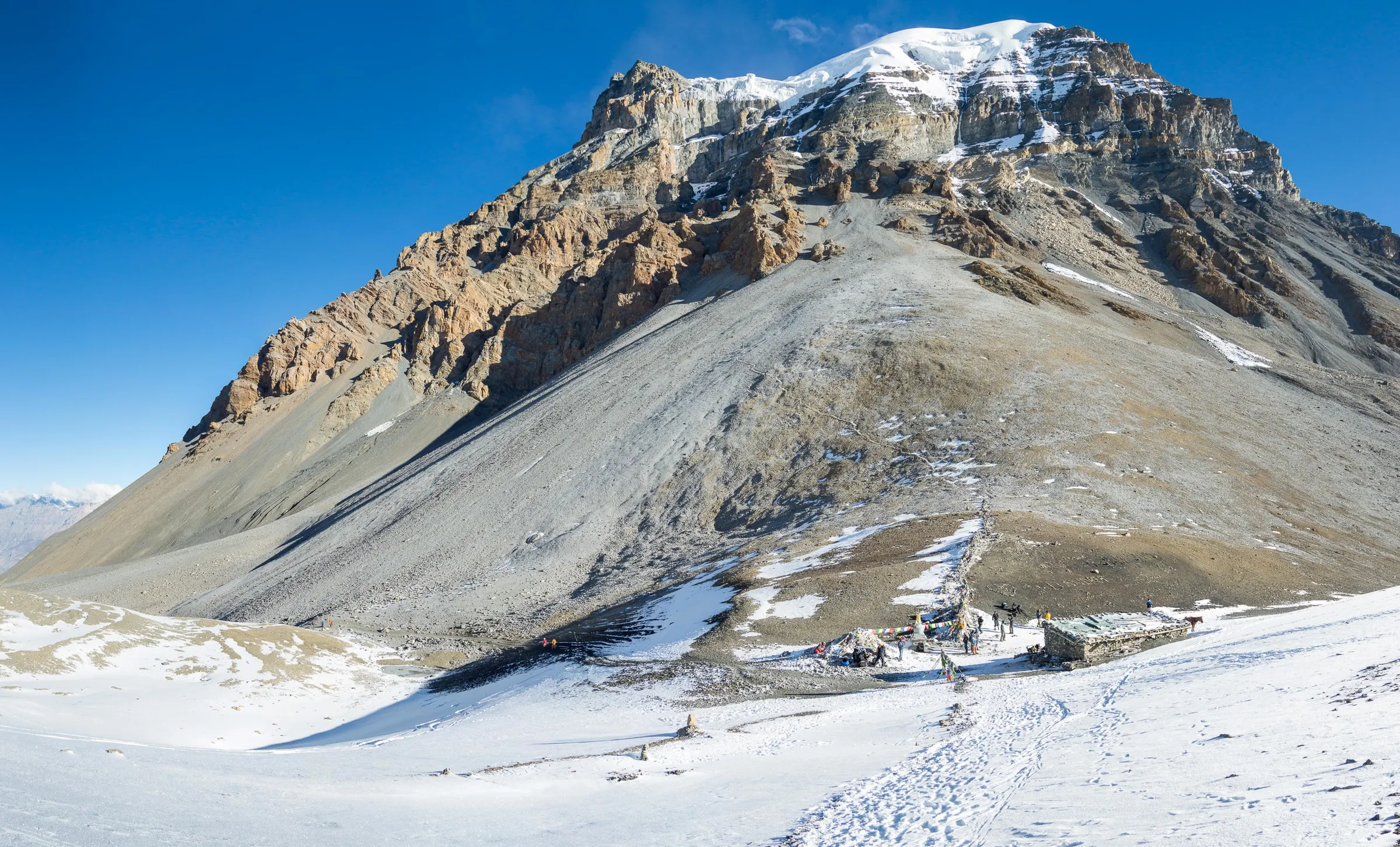
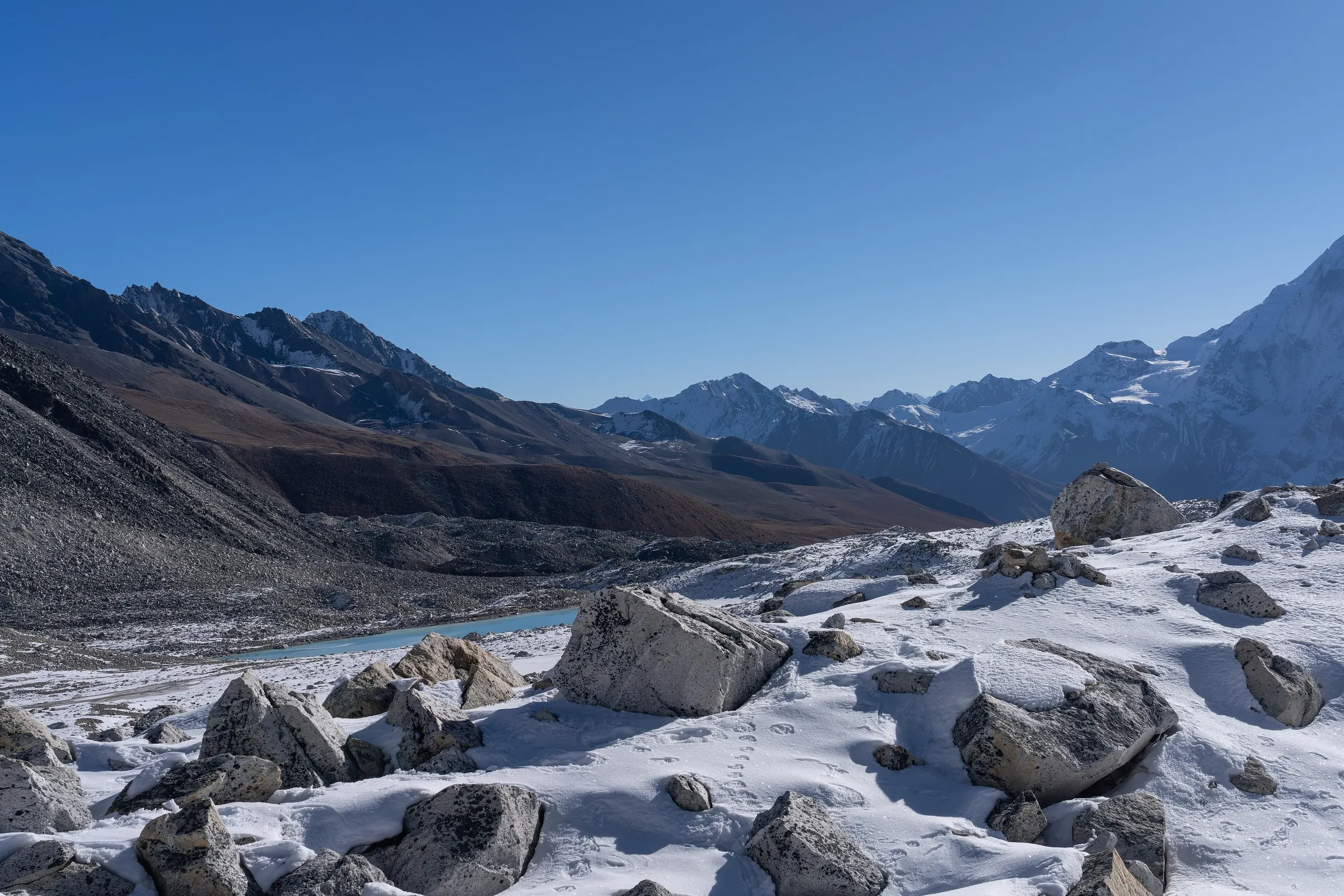
Climb slowly past the Larkya glacier moraine to Dharmasala, a small, basic lodge at the foot of the pass. An early night before the crossing.
Day 11: Dharmasala over the Larkya La (5,106 m) to Bhimthang (3,720 m)
The high point of the trek · Glaciers and Himlung Himal
8–10 hrs · 5,106 m · High point
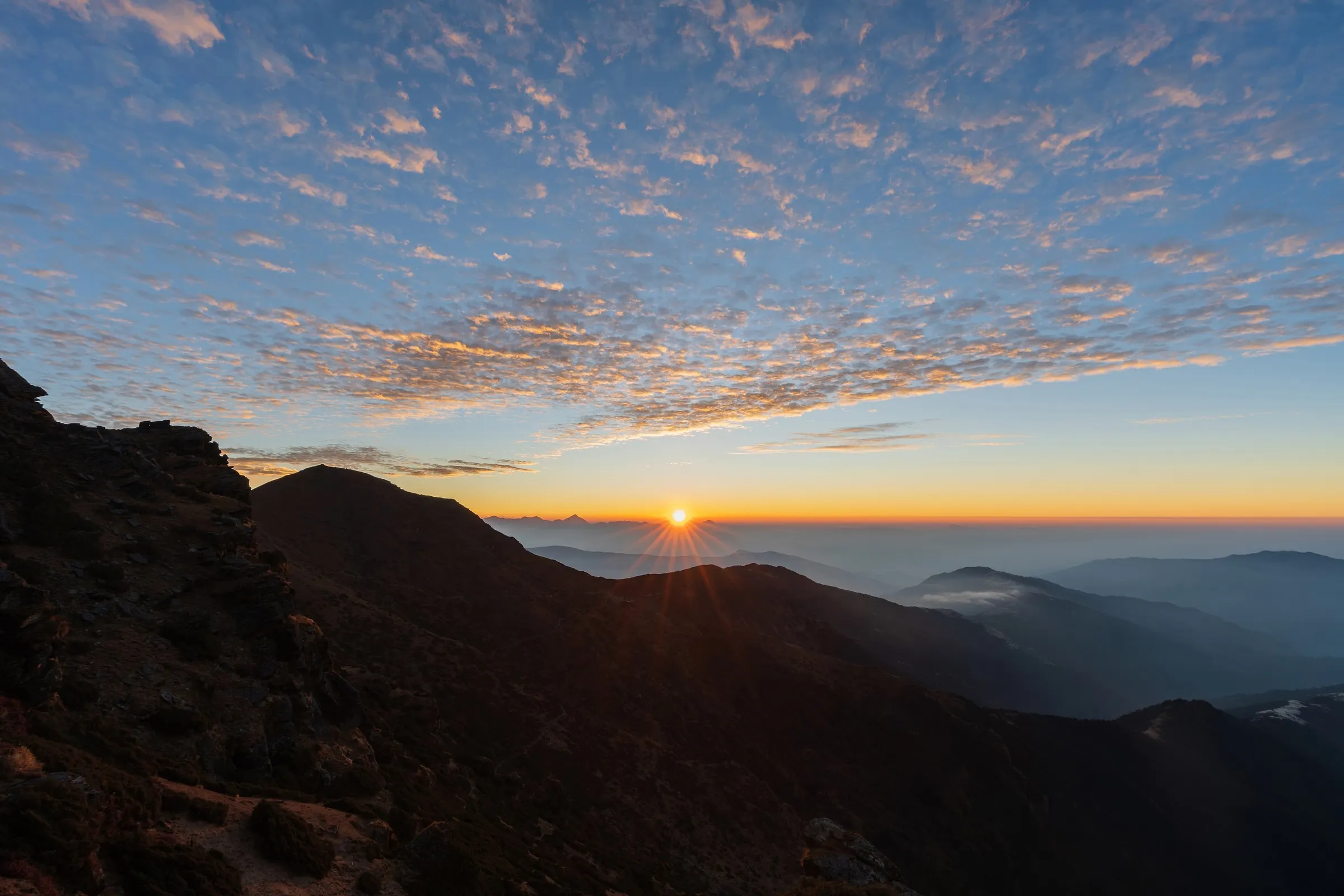
A pre-dawn start up the moraine to the prayer flags of the Larkya La, with Himlung Himal and Kang Guru ahead. A long, steep descent brings you to the meadows of Bhimthang.
Pick your Manaslu dates with us
Ask about Manaslu datesFrequently asked questions
What is the best month for the Manaslu Circuit?
October, followed by November and April. These months give the clearest views and the most reliable conditions on the Larkya La.
Can I trek Manaslu in December?
Early December is often clear, but snow can close the pass without warning and some upper lodges close. We plan December treks with extra spare days, or suggest a lower route.
Is Manaslu crowded in October?
Busier than other months, but still much quieter than the Annapurna Circuit, because the restricted-area rules keep numbers down.
How cold does it get on the Larkya La?
Nights at Dharmasala are below freezing in every season, and colder in late autumn. You start the pass before dawn, so warm layers, gloves and a good sleeping bag matter.
Can I trek Manaslu in the monsoon?
We don't recommend it. Rain, landslides and leeches make the lower gorge hard work, and the views are mostly hidden. If you can only travel in summer, ask us about Nar Phu instead.