In this guide (8 sections)
Quick answer
You need three permits: the Manaslu restricted area permit, the Manaslu Conservation Area Permit (MCAP) and the Annapurna Conservation Area Permit (ACAP) for the last part of the trek. The restricted permit is issued only through a registered agency, with a licensed guide. We arrange all three before you arrive.
I arrange permits for every trek we run, and Manaslu is the one people ask about most. The rules sound complicated, but in practice you send us a few documents, we do the queueing in Kathmandu, and your guide carries the papers on the trail. This guide explains what each permit is for, so nothing on the checkpoints surprises you.
Why Manaslu is a restricted area
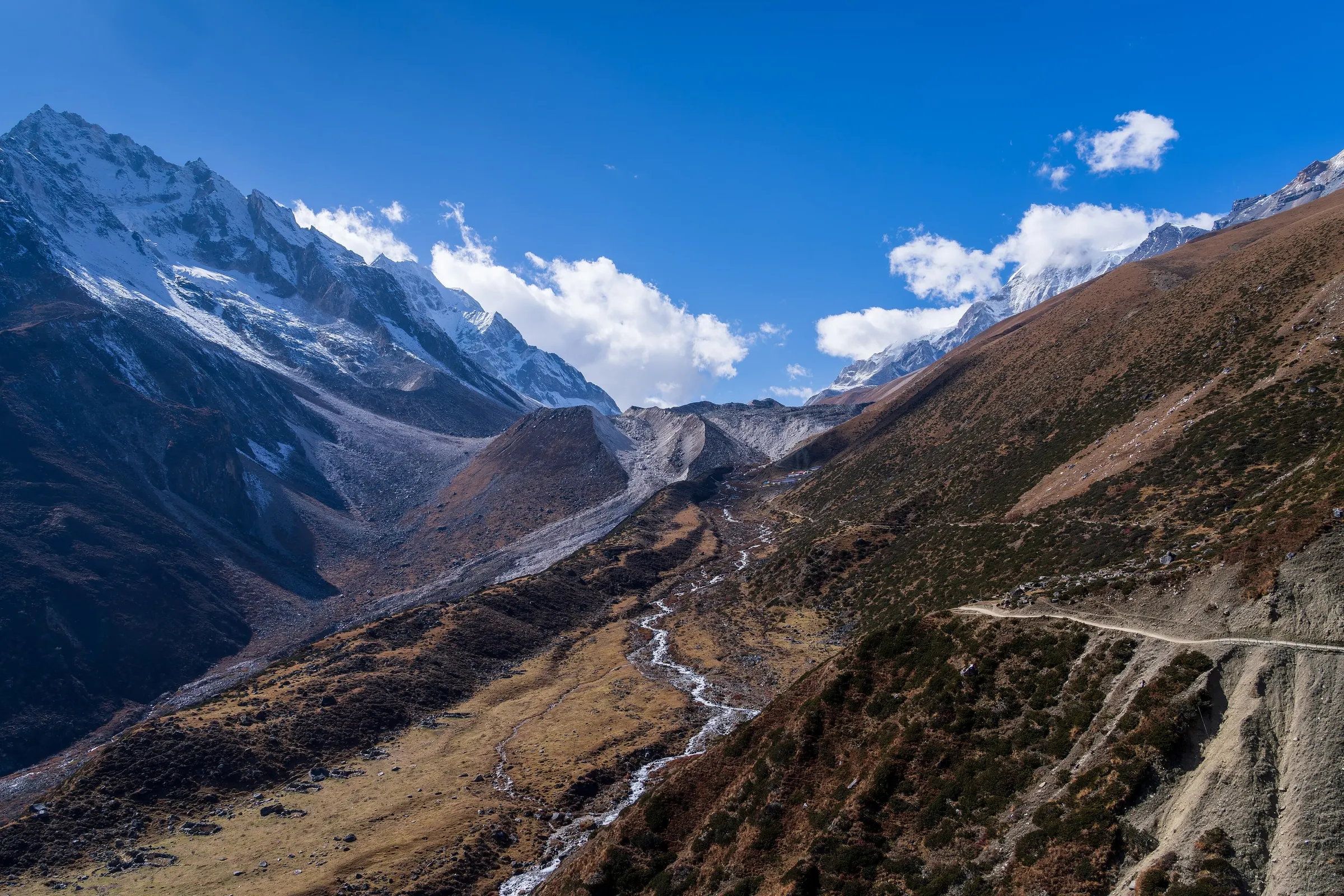
The upper Budhi Gandaki valley runs close to the Tibet border, and Nepal manages border areas like Manaslu, Nar Phu, Upper Mustang and Kanchenjunga as restricted areas. The aim is to keep numbers controlled and to make sure every visitor travels with a licensed guide who knows the area.
For you, it means two things: you can't trek here independently, and the permit must be applied for by a registered trekking agency. It also means the trail stays far quieter than the Annapurna Circuit, even in October.
The three permits you need
Manaslu restricted area permit. Covers the restricted part of the valley, roughly from Jagat to Sama and Samdo. Issued by the Department of Immigration through your agency, for set dates.
Manaslu Conservation Area Permit (MCAP). The conservation fee for the Manaslu Conservation Area, which you walk through for most of the trek.
Annapurna Conservation Area Permit (ACAP). After the Larkya La you come down through Bhimthang to Dharapani, which is in the Annapurna Conservation Area.
Some trekkers are also asked for a TIMS card at checkpoints, depending on the season. We carry what the checkpoints ask for, so you don't need to arrange anything yourself.
Can I trek Manaslu solo?
Not independently. Every trekker in the restricted area must be with a licensed guide arranged through an agency. Group-size rules for the restricted permit have changed in the past, so if you are travelling alone, tell us your dates early: we confirm the current rules, and where needed we can match you with other trekkers on the same dates.
Many of our Manaslu trekkers are couples or friends travelling together, and some join a small group. Either way, you still walk at your own pace with your own guide.
What we need from you
- A clear scan of your passport (valid for at least 6 months)
- Your Nepal visa, or the date you will get it on arrival
- A recent passport-style photo (digital is fine)
- Your travel insurance details, including helicopter rescue cover
- Your trek dates, so we apply for the right days
- The names of everyone travelling with you
How the process works, step by step
You book the trek and send us the documents above.
We apply for the restricted area permit with the Department of Immigration in Kathmandu, usually on a working day before your trek.
We collect the MCAP and ACAP at the same time.
Your guide brings all the permits to your briefing, and keeps them safe on the trail.
At checkpoints such as Jagat, Philim and Sama, your guide shows the papers while you rest.
Because the restricted permit is for set dates, tell us early if your plans change. Your guide also needs to know about any rest days you want to add, so the permit covers them.
What the permit means for your plans
Because the restricted permit is issued for set dates, the Manaslu Circuit is less flexible than a trek in Langtang or Annapurna. That doesn't mean you can't rest when you need to: our itinerary already includes an acclimatisation day in Samagaon, and your guide can use it as a spare day if the weather is bad on the Larkya La.
If you want more time, for a side trip to Manaslu Base Camp or Birendra Lake, or simply a slower pace, tell us before we apply. Adding days at the start is easy; changing dates once the permit is issued takes more paperwork.
At the end of the trek you leave the restricted area after the Larkya La and walk into the Annapurna Conservation Area at Bhimthang and Dharapani. From there you are free to continue, for example to Nar Phu or along the Annapurna Circuit, as long as the right permits are in place.
Adding the Tsum Valley
The Tsum Valley branches off the Manaslu trail near Lokpa and is a separate restricted area with its own permit. If you want to add it, tell us before we apply, so the dates and permits match. It adds about a week of monasteries and quiet Tibetan villages.
Let us sort your Manaslu permits
Ask about Manaslu on WhatsAppFrequently asked questions
Which permits do I need for the Manaslu Circuit?
Three: the Manaslu restricted area permit, the Manaslu Conservation Area Permit (MCAP) and the Annapurna Conservation Area Permit (ACAP) for the section after the Larkya La.
Can I get the Manaslu permit myself?
No. The restricted area permit is issued only through a registered trekking agency, and you must trek with a licensed guide. We handle the application for you.
How long does it take to get the permits?
Usually a working day in Kathmandu once we have your documents. Send them when you book, so there is no rush before your trek.
What if my dates change?
The restricted permit is for set dates, so tell us as soon as you can. If we haven't applied yet, we simply use the new dates. If we have, we help you sort out the change.
Do I need a separate permit for the Tsum Valley?
Yes. The Tsum Valley is its own restricted area. Tell us before we apply, and we add it to your paperwork.