In this guide (7 sections)
Quick answer
Pack for four seasons in one day: warm layers you can add and remove, broken-in boots, a sleeping bag rated to about −10 °C and a way to treat water. Your porter carries a duffel of up to 15 kg; you carry a 25–35 litre daypack with what you need between teahouses.
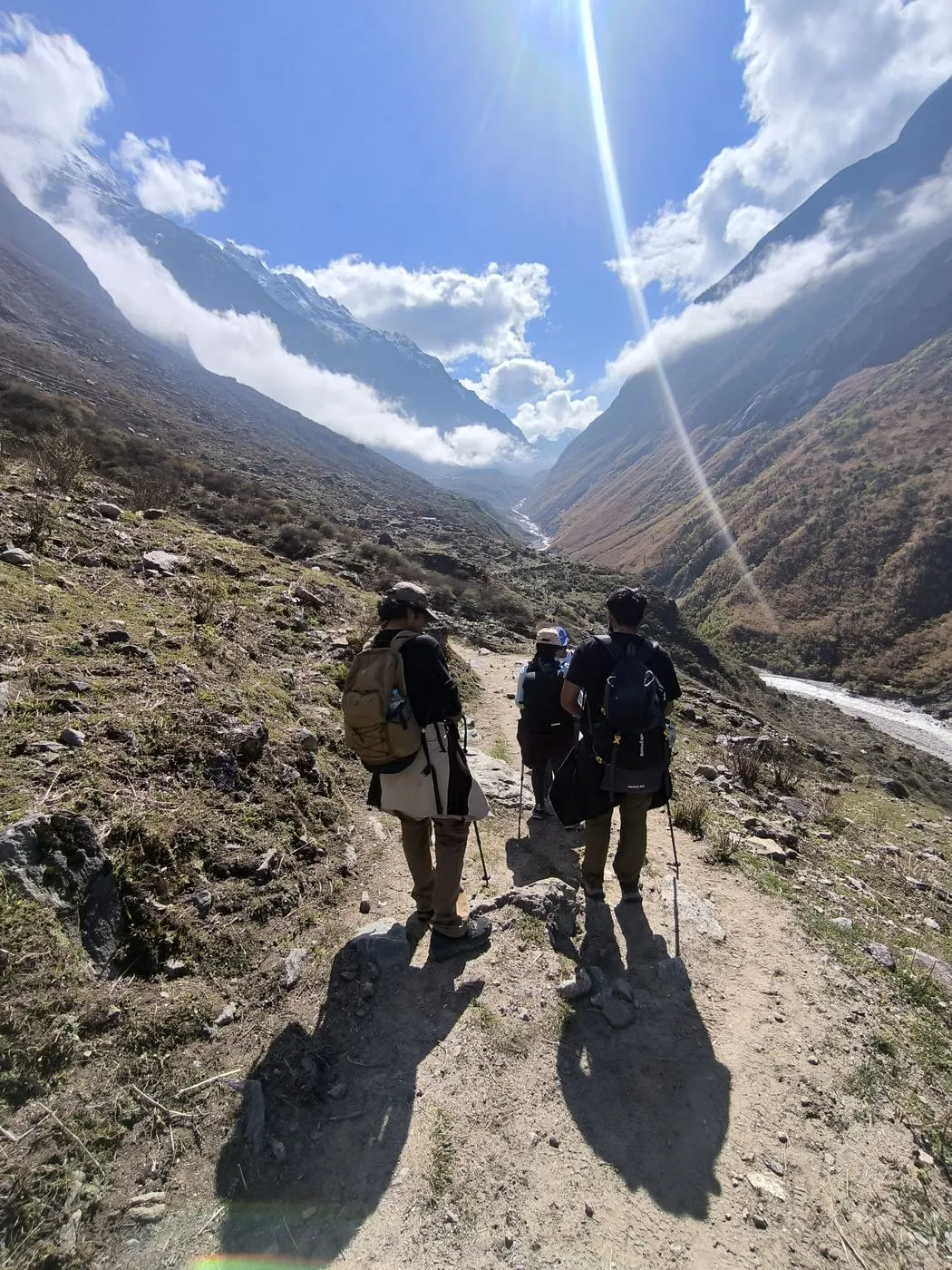
On a teahouse trek you sleep and eat in family-run lodges, so you don't need a tent, stove or food. That makes packing simpler than most people expect. The hard part is the temperature range: a warm, sweaty morning in the forest at 1,500 m and a freezing night at 3,900 m can be two days apart.
This is the list we send to every trekker before treks in Langtang, Annapurna and the Everest region. Adjust it for your trek's season and highest point, and ask us if you are unsure about anything.
How packing works on a teahouse trek
Your gear is split in two. A duffel bag goes with your porter and you only see it in the evening. A daypack stays on your back all day.
Duffel (porter): sleeping bag, spare clothes, toiletries, chargers. Up to 15 kg, soft bag, no hard suitcase.
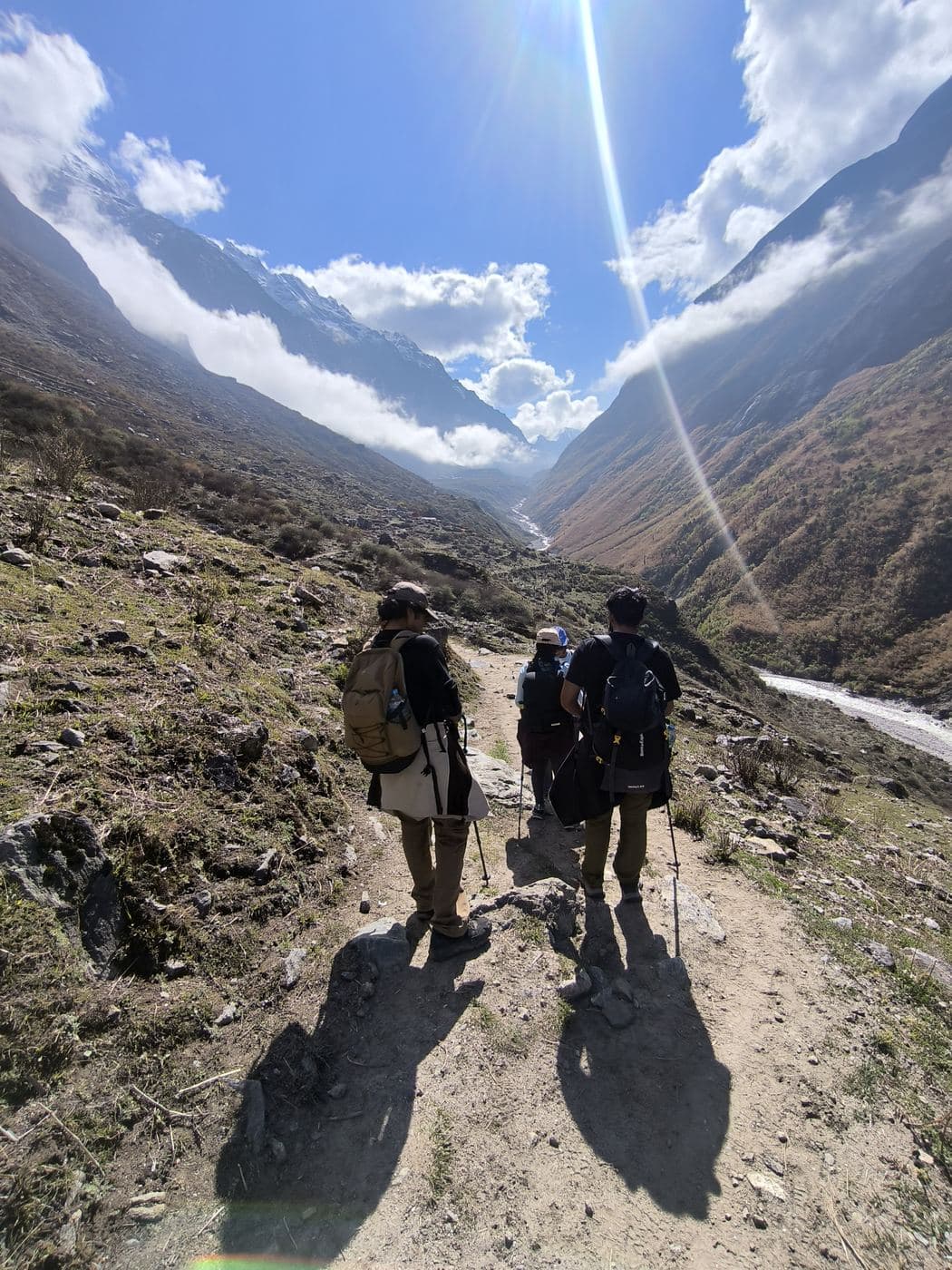
Daypack (you): water, rain jacket, warm layer, sun protection, snacks, camera, documents and any medicine you need during the day.
Left in Kathmandu: city clothes and anything you won't need on the trail. Most hotels store bags for free while you trek.
Weigh your duffel before you leave home. Porters carry two trekkers' bags on many treks, so the 15 kg limit matters for their health as well as yours.
Clothing and layers
- 2–3 base layer tops (merino or synthetic, not cotton)
- 1–2 pairs of base layer leggings for cold nights
- A fleece or light insulated mid-layer
- A down jacket for evenings and early starts
- A waterproof, windproof jacket
- Waterproof over-trousers
- 2 pairs of trekking trousers
- A warm hat, a sun hat and a buff
- Thin liner gloves and warm outer gloves
- Underwear for the trek and a set of clean clothes for the evening
Why layers beat one big jacket
You will be warm while walking uphill and cold the minute you stop. Layers let you change quickly without overheating or getting chilled in sweaty clothes.
A simple system works: a base layer next to your skin, a fleece over it, and a shell against wind and rain. The down jacket comes out at rest stops, in the dining room in the evening and for sunrise viewpoints. Above about 3,500 m you will wear most of your layers every evening, because only the dining room is heated, and usually only for a few hours.
Footwear
- Waterproof trekking boots with ankle support, already broken in
- Light shoes or sandals for the teahouse
- 4–5 pairs of cushioned trekking socks
- Blister plasters and tape
- Gaiters for spring mud or winter snow (optional)
Sleeping well in a teahouse
Teahouse rooms are simple: two beds with a foam mattress, a pillow and usually a blanket. Rooms are not heated. A good sleeping bag is the single most important piece of gear for a comfortable trek.
A sleeping bag with a comfort rating of about −10 °C for treks above 3,500 m in spring and autumn; colder for winter.
A sleeping bag liner adds warmth and keeps the bag clean.
Earplugs and an eye mask: walls are thin and dogs bark at night.
A headlamp with spare batteries for night-time toilet trips and pre-dawn starts.
Health, water and hygiene
There are no pharmacies on most trails and drinking water needs treating. Pack a small personal kit; your guide also carries a first-aid kit and a pulse oximeter.
Water treatment: purification tablets, a UV pen or a filter bottle, plus two 1 litre bottles. Refilling saves money and plastic.
Personal medicine: anything you take at home, in your daypack. Ask your doctor about altitude medication before you travel.
Small first-aid kit: blister plasters, painkillers, rehydration salts and stomach medicine your doctor recommends.
Sun protection: SPF 50 sunscreen, lip balm with SPF and good sunglasses. The sun is strong at altitude, even when it is cold.
Hygiene: hand sanitizer, wet wipes, a quick-dry towel and toilet paper (not always provided).
What to leave at home
Every extra kilo is carried by someone, so we ask trekkers to pack light.
Cotton clothes and jeans: they stay wet and cold.
Heavy books, big toiletry bottles and hair dryers.
A hard suitcase: porters need a soft duffel.
Lots of cash in one place: split it between your bags, and bring enough Nepali rupees from Kathmandu, because there are few or no ATMs on most trails.
Documents and small extras
- Passport and copies (permits are checked on the trail)
- Travel insurance details with the emergency phone number
- Nepali rupees in small notes for snacks, showers and charging
- A power bank and charging cables
- Trekking poles for the descents
- Snacks you like from home
Not sure about your gear?
Ask our team on WhatsAppFrequently asked questions
How heavy should my daypack be?
Around 4–6 kg is comfortable: water, a warm layer, a rain jacket, sun protection, snacks and your camera. Everything else goes in the porter's duffel.
Do I need a sleeping bag if the teahouse has blankets?
Yes. Blankets are thin and not always clean, and rooms are unheated. A sleeping bag rated to about −10 °C keeps you warm on the high nights. You can rent one in Kathmandu.
Can I buy gear in Kathmandu?
Yes. Thamel has many shops for jackets, sleeping bags, poles and socks. Quality varies, so bring your boots and base layers from home and rent or buy the bulky items in Kathmandu.
What changes for a winter trek?
Bring a warmer sleeping bag, an extra insulated layer, warm gloves and microspikes for icy paths. We confirm what you need for your route and dates.
Do I need trekking poles?
They are not essential, but most of our trekkers are glad to have them on the long descents. They take strain off your knees and help on stone steps.