In this guide (8 sections)
Quick answer
For most people the best first Himalayan trek is Poon Hill (5 days, 3,210 m) if time is short, or the Langtang Valley (10 days, no flights) if you want to walk among glaciers. Mardi Himal suits fit walkers who want a quiet ridge, and the Tamang Heritage Trail is the gentlest, with village homestays.
My first trek in Nepal was a short loop near Pokhara. I had read about Everest Base Camp for years, but I had never slept above 2,000 m and had no idea how my body would cope. Starting smaller was the best decision I made: I came home hooked, and confident enough to go higher on the next trip.
This guide compares four treks that work well as a first Himalayan trek. All of them use teahouses or homestays, need no climbing skills and fit into one or two weeks of holiday. Our guide Bikash Gurung, who leads first-timers in the Annapurna region every season, checked it.
What makes a good first trek
A first trek should give you big mountain views without big risks. Four things matter most:
Moderate altitude. Sleeping below about 3,900 m keeps the risk of altitude sickness low.
Easy access. A drive to the trailhead means no waiting for mountain flights in bad weather.
Good teahouses. Warm dining rooms and simple, clean rooms make the evenings easy.
Short days. Five to six hours of walking leaves time to rest, look around and enjoy it.
| Poon Hill Trek | Langtang Valley Trek | Mardi Himal Trek | |
|---|---|---|---|
| Days | 5 | 10 | 8 |
| Difficulty | Easy | Moderate | Moderate |
| Highest point | 3,210 m | 4,773 m | 4,500 m |
| Best months | Oct–Apr | Mar–May, Oct–Nov | Mar–May, Oct–Nov |
| From | $430 | $890 | $540 |
Poon Hill: the classic short trek
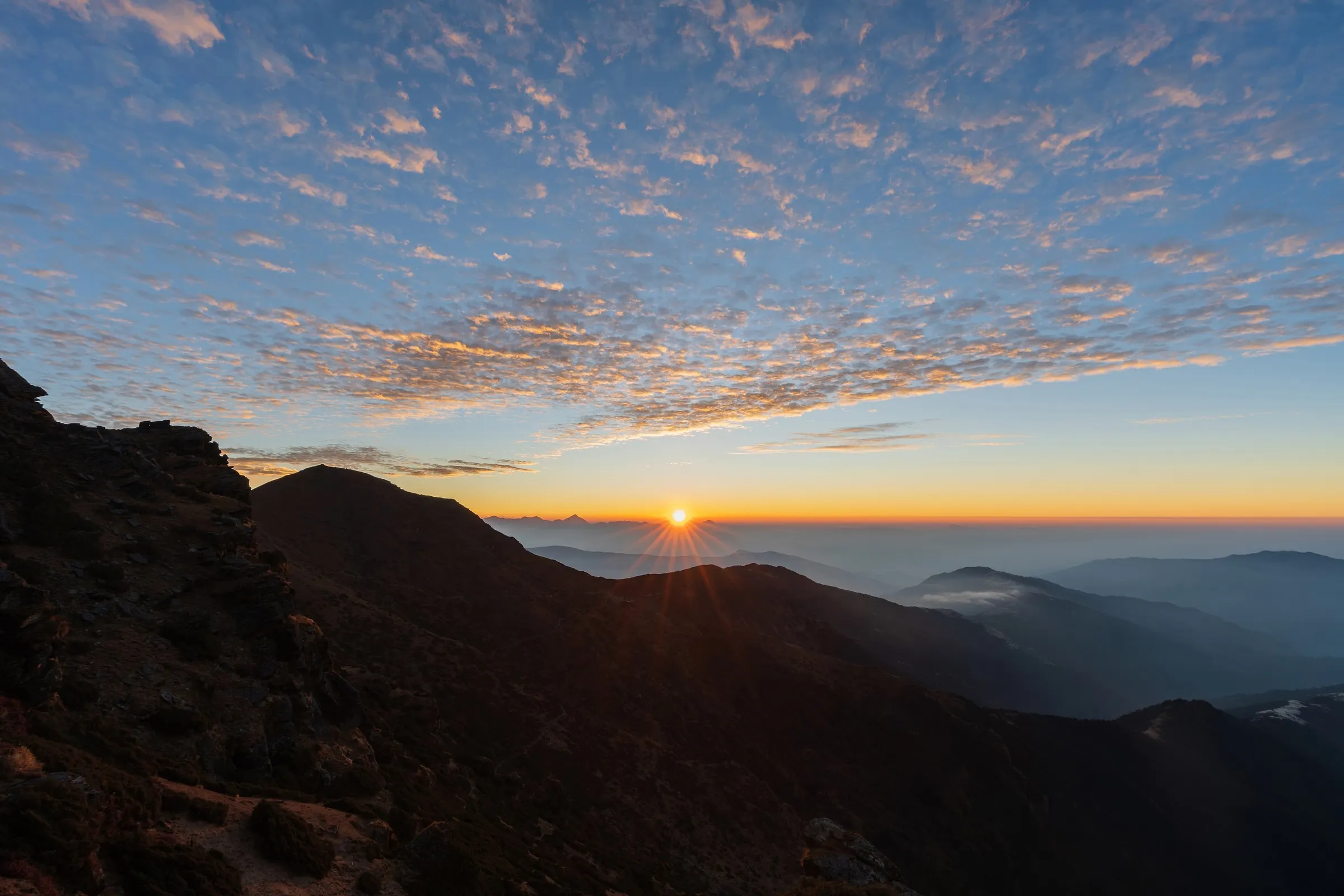
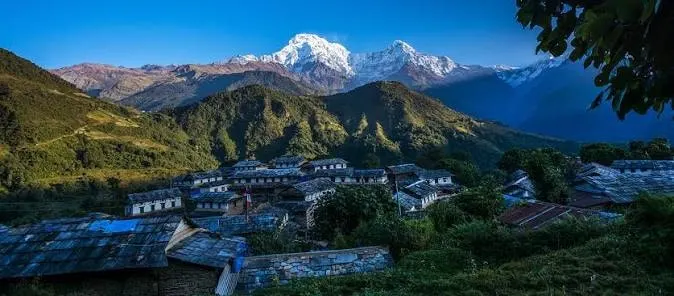
Poon Hill is the most popular first trek in Nepal for good reasons. From Pokhara it takes five days through Gurung villages and rhododendron forest, with a sunrise climb to Poon Hill (3,210 m) for a view of Dhaulagiri and Annapurna South. The highest night is at Ghorepani (2,860 m), so altitude is rarely a problem.
The challenge is the stone steps: thousands of them, especially between Tikhedhunga and Ulleri. Walk slowly and you will be fine. It is a good choice for families and for anyone with only a week in Nepal.
Langtang Valley: glaciers without a flight
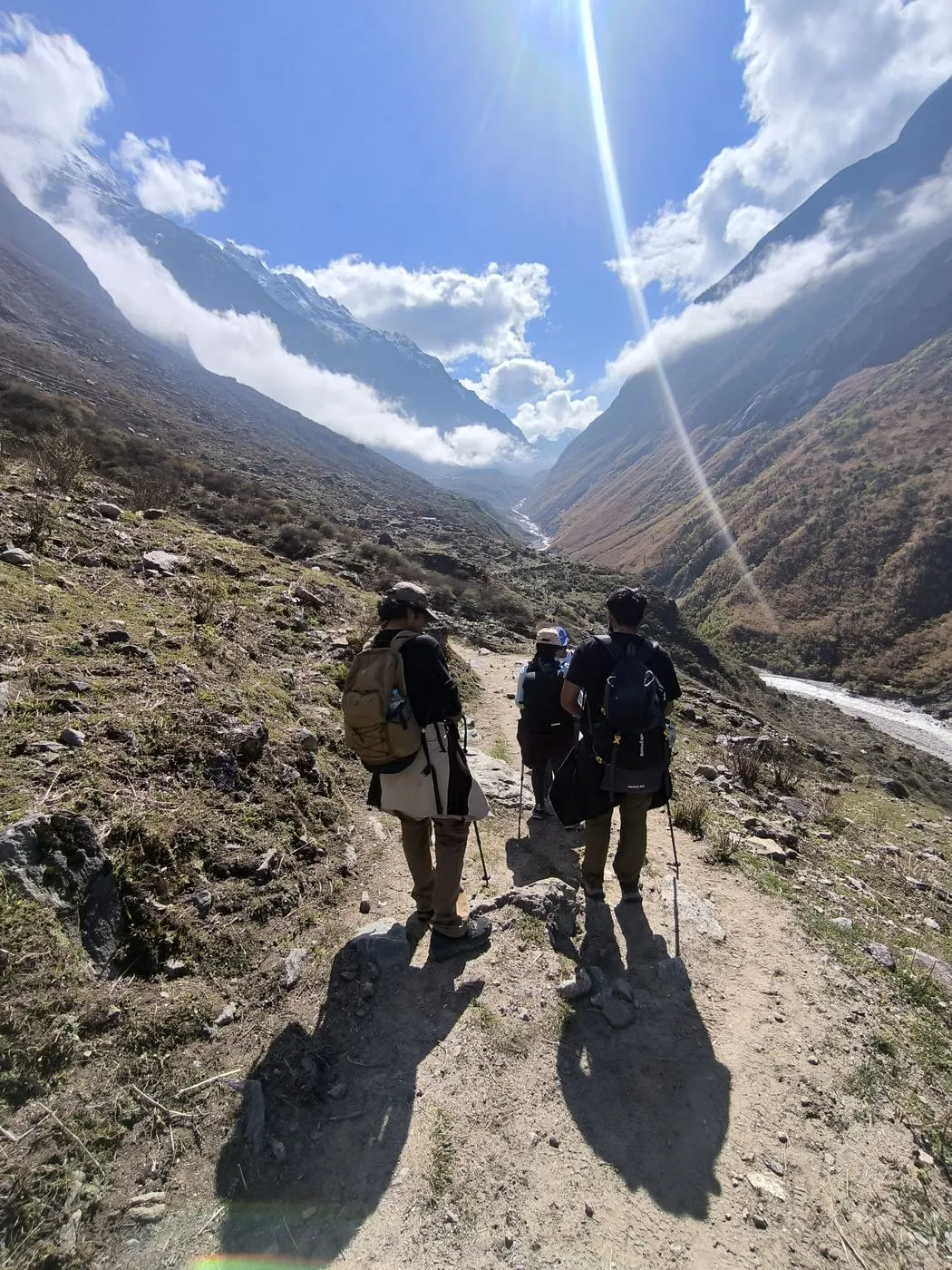
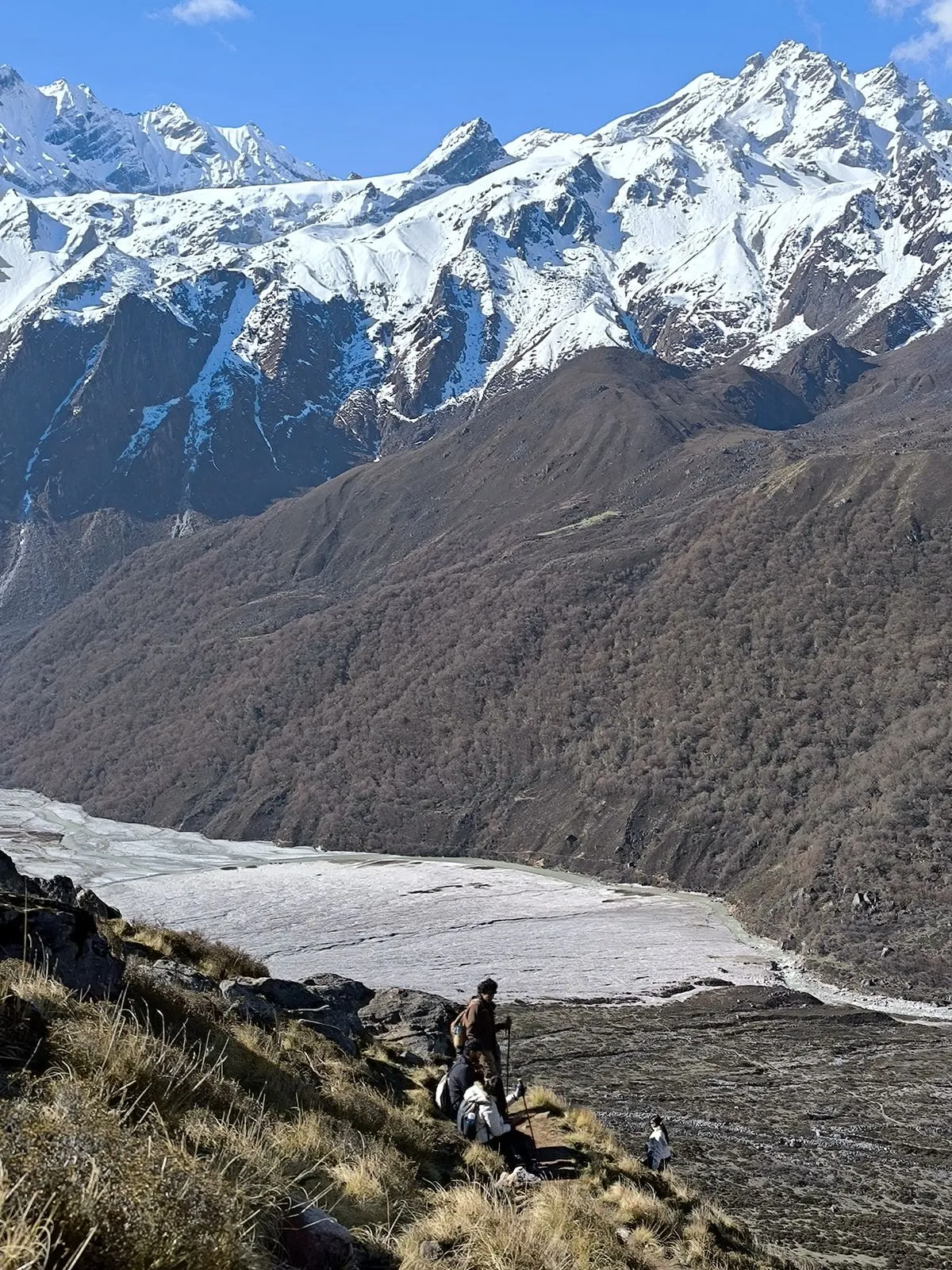
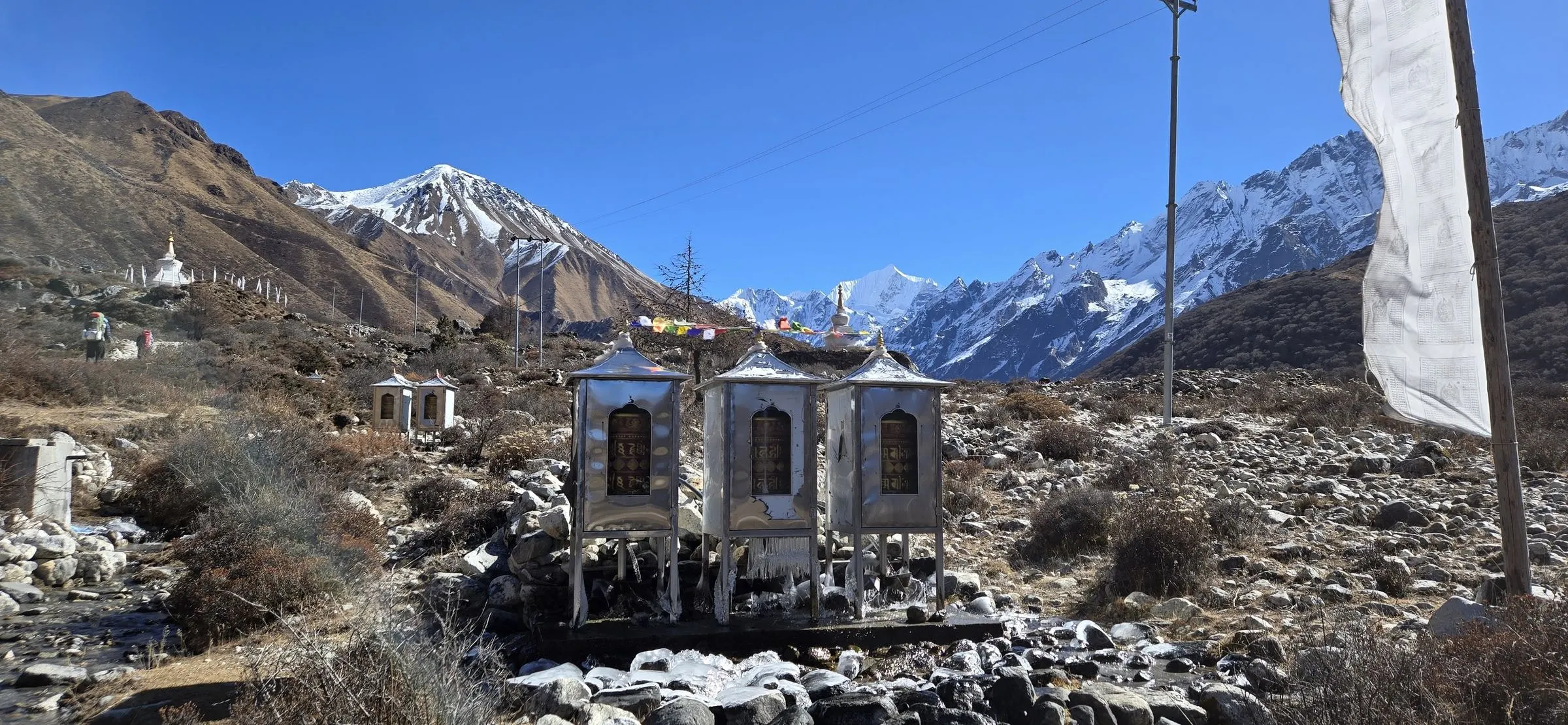
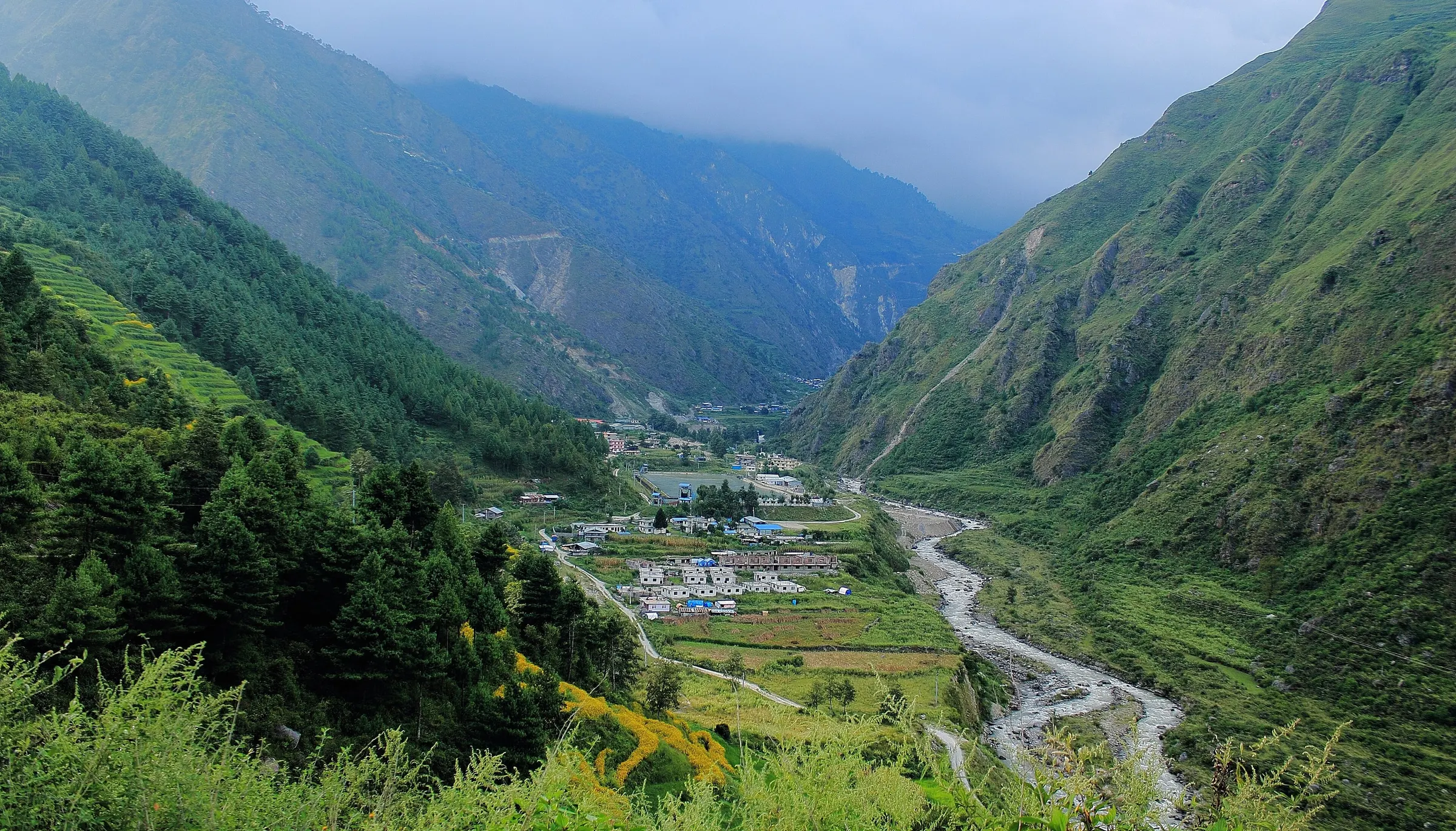
If you want to feel truly among big mountains, the Langtang Valley is hard to beat. You drive from Kathmandu to Syabrubesi, then walk up the valley to Kyanjin Gompa (3,870 m), with Langtang Lirung (7,227 m) and its glaciers above you. A sunrise hike up Kyanjin Ri (4,773 m) is the high point.
The climb is gradual and the trek takes about ten days. Because there is no flight, it is also one of the best-value treks in Nepal. Read more on the Langtang region page.
Mardi Himal: a quiet ridge for fit walkers
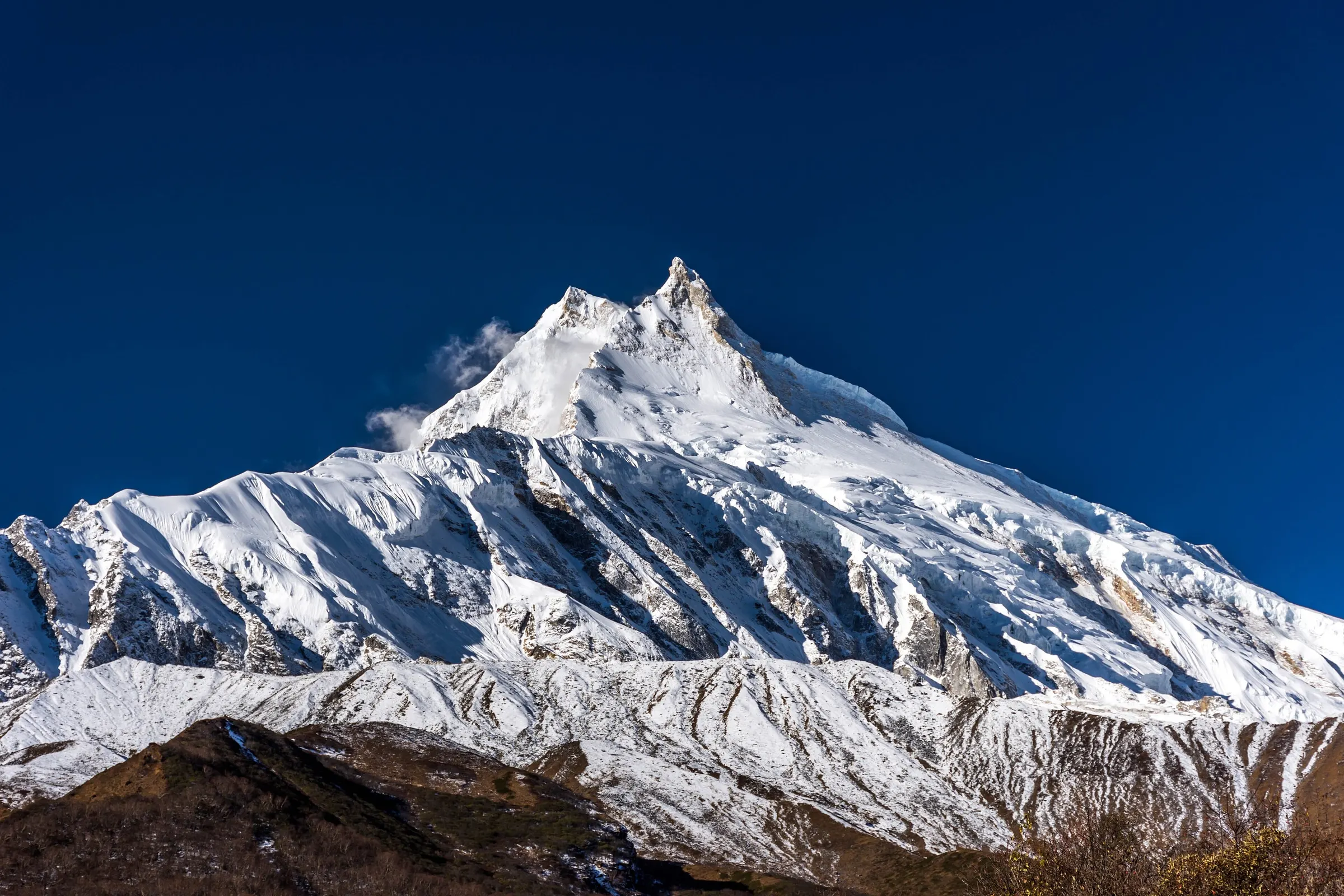
Mardi Himal is a narrow ridge that climbs from the forest above Pokhara towards Machapuchare, the sacred Fishtail peak. In about a week you reach the base camp viewpoint at about 4,500 m. It is quieter than Poon Hill and the views are closer.
The trade-off is steepness: the days are short but the path climbs hard, and the top is high enough to need a slow pace. Choose it if you already hike in hills at home. See the Mardi Himal region page.
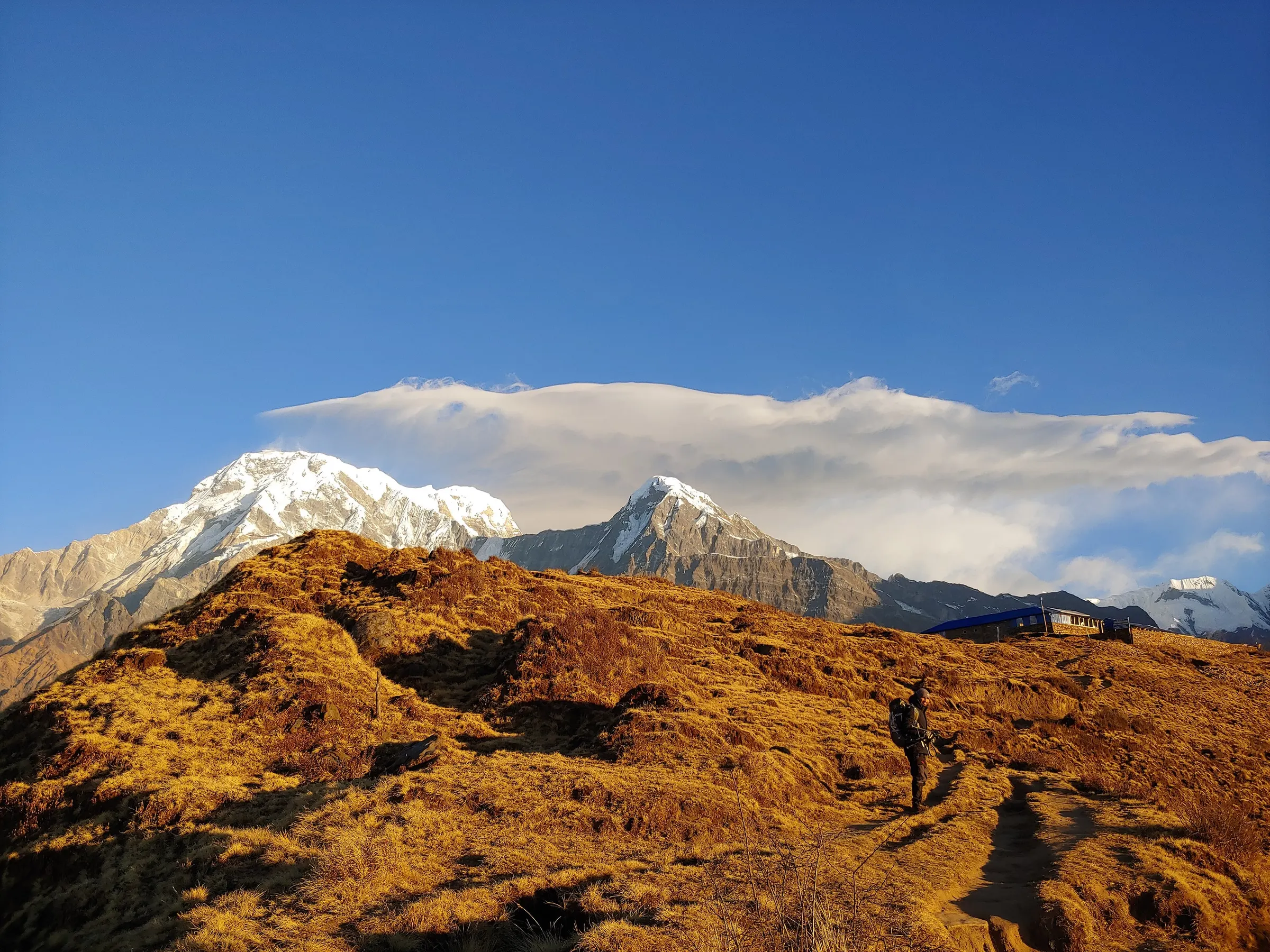
Tamang Heritage Trail: culture and homestays
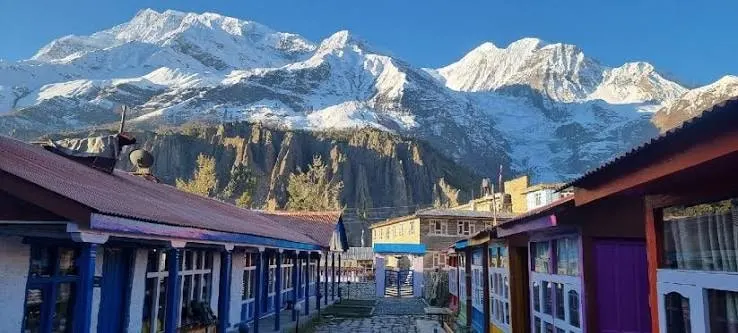
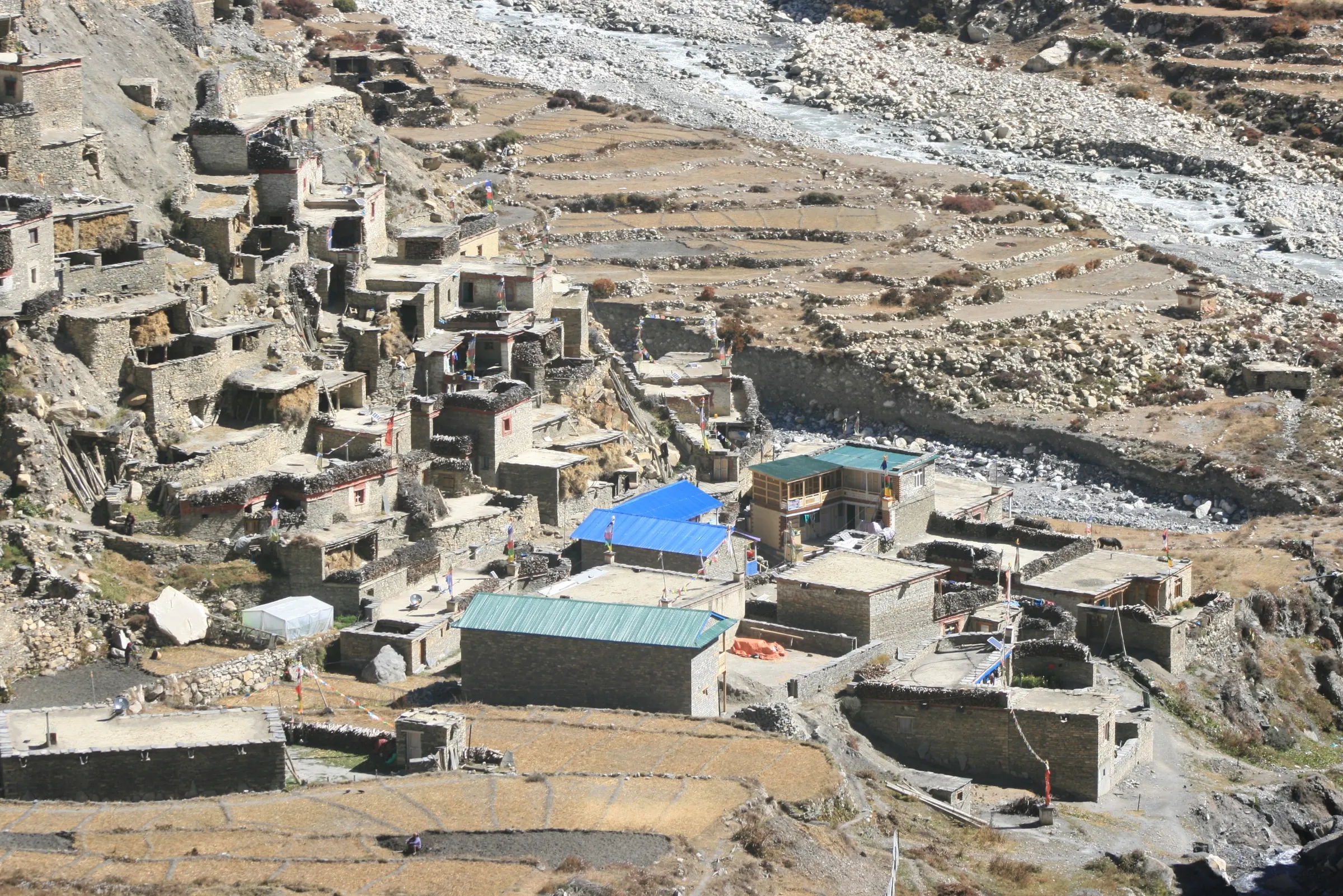
The Tamang Heritage Trail is the gentlest of the four. It loops through Tamang villages near the Tibetan border, with natural hot springs at Tatopani and a highest point of about 3,165 m at Nagthali. You stay with families in homestays and eat what they eat.
It is less about one big summit view and more about people: weaving, farming and village life. It suits families, slower walkers and anyone who wants culture first. It starts from Syabrubesi, so you can add the Langtang Valley if you have more time. See the Tamang Heritage Trail page.
“On a first trek the mountains are only half of it. People remember the evening in the dining room, the tea with a family in Ghandruk. Choose a trek where you have time to enjoy that, not one where you are racing the clock.”
Questions to ask yourself before you choose
- How many days do I really have, including travel to and from Nepal?
- Have I walked 5–6 hours a day, several days in a row?
- Do I want big glaciers, village life, or a bit of both?
- Am I happy to fly to a mountain airstrip, or would I rather drive?
- Which months can I travel? (The best are March–May and October–November.)
Which one I would choose
If you have one week, go to Poon Hill. If you have ten days and want the feeling of a big Himalayan valley, go to Langtang. If you are a strong hiker who likes quiet trails, choose Mardi Himal. And if the people interest you as much as the peaks, walk the Tamang Heritage Trail.
Whichever you pick, start with an easy pace and a good guide. Most of us who start small come back for a longer trek.
Help me choose my first trek
Ask on WhatsAppFrequently asked questions
What is the easiest Himalayan trek in Nepal?
Poon Hill and the Tamang Heritage Trail are the easiest of the classic treks: short, with the highest point around 3,200 m. Both still need reasonable fitness for 5–6 hours of walking a day.
Can a beginner do Everest Base Camp?
Some do, but it is a long, high trek to 5,545 m with flights that are often delayed. We usually suggest a shorter trek first, or a slow Everest itinerary with extra rest days.
How fit do I need to be for a first trek?
If you can walk 5–6 hours on a hilly day and then do it again the next day, you are fit enough for any of these four. Stair climbing and weekend hikes for 6–8 weeks before you go help a lot.
Do I need a flight to reach these treks?
No. Langtang and the Tamang Heritage Trail start with a drive from Kathmandu. Poon Hill and Mardi Himal start near Pokhara, which you can reach by road or a short flight.
When should I go?
March to May and October to November give the best weather. Poon Hill and the Tamang Heritage Trail are also good in December, when the lower trails are clear and quiet.